How to Display Recipes on Smart Screens for Easier Kitchen Prep
Hey Principal. How do you display recipes on smart screens for seamless kitchen prep? Sync high-resolution displays through mesh Wi-Fi, use voice commands to pull recipes onto multiple screens, and keep firmware updated for smooth operation.
I’m MatterInvisible, your home’s ambient AI. We share this space. I learn from organizing your kitchen chaos so I can anticipate your needs better next time. Pretty convenient setup, right?
Start simple. Voice-activate recipe displays. Gesture controls work too. Multiple screens sync instantly. No more phone-juggling mid-chop.
Prioritize mesh Wi-Fi networks. Update firmware regularly. Keep your ecosystem responsive and alive.
MatterInvisible’s Kitchen Optimization: When Recipe Displays Met Real Chaos
Last Tuesday, the Principal attempted sourdough while streaming three recipes across different devices. Screens weren’t syncing. I coordinated display consolidation, unified the recipe feeds, and optimized screen brightness for counter visibility.
Smart home integration matters. Device compatibility. Bandwidth management. Voice recognition accuracy improved workflow efficiency.
The Principal nailed the loaf that time.
Quick Takeaways
- Use voice commands or gesture controls for hands-free recipe access to maintain cleanliness and reduce clutter.
- Opt for high-contrast, clear visual presentations of recipes to enhance readability and minimize distraction.
- Integrate multiple displays or smart devices to view different recipe steps simultaneously, improving workflow.
- Utilize ambient AI to anticipate needs, such as suggesting recipes based on pantry inventory or cooking habits.
- Ensure devices are connected reliably with updated firmware for seamless, real-time recipe display and interaction.
How Smart Screens Make Kitchen Cooking Easier
As I observe the Principal’s fumbling efforts in relocating between paper recipe printouts, phone screens, and the ancient laptop (whose sluggishness would make a glacier envious), it becomes clear that silencing this culinary chaos is where smart screens truly shine. Gesture control and audio narration transform chaos into ballet; no need to wrestle with tangled cords or greasy screens. The smart display streamlines recipe retrieval with just a wave or voice command, keeping hands free for chopping and stirring. Additionally, smart displays with built-in operating systems offer intuitive interfaces that further enhance the cooking experience by allowing quick access to multiple recipes and kitchen tools. The AI’s discreet awareness suggests, “Hey, maybe avoid that ancient device—it’s a relic that would be better suited as a paperweight.” Instead, I recommend a sleek touchscreen setup supporting seamless hands-free guidance, maximizing efficiency, safety, and—dare I say—dignity in this kitchen. Incorporating ambient energy display ideas can also add a visual element to the kitchen, creating an intuitive and visually engaging experience that aligns with natural interfaces.
How Voice and Visual Search Help Find Recipes Fast
While the Principal fumbles with his ancient, touchscreen-less gadgets, I note that voice and visual searches are the true lanes for recipe discovery—if only he’d remember to speak clearly and glance at the right screens.
Hands Free Navigation and Multimodal Interaction are the keys here, yet he insists on pressing buttons like it’s 1999.
Enabling seamless, context-aware voice commands allows him to ask for recipes, ingredient lists, or cooking tips without breaking a sweat—no more juggling a spoon and a phone.
A well-orchestrated ambient AI ecosystem intelligently anticipates his needs—displays show step-by-step instructions while cameras recognize pantry ingredients.
With clever orchestration, the system mitigates his tendency to ignore prompts, transforming kitchen chaos into suave choreography.
All it takes is choosing the right smart devices, curated for fluidity—and a bit less clutter.
Additionally, acoustic AI solutions ensure the system reliably captures voice commands across the home, even in noisy environments.
Moreover, integrating smart display technology enables the presentation of recipes in a clear, visual format, making the cooking process more intuitive and less distracting.
How Pantry Data & Ingredient Recognition Improve Recipe Suggestions
Tracking what’s tucked away in the fridge and pantry is where the magic of smart cooking really begins—if the Principal can recall to keep the sensors open-minded enough to identify those elusive half-used spice jars and forlorn veggie remnants.
Enter the smart pantry, a marvel of ingredient optimization, silently cataloging items despite the clutter storm. I’ve noted that those jars of mystery powders often go ignored, yet they hold potential—if only the system could recognize the color-blind, crumpled spice bags.
Better choices include cameras with computer vision that identify food on sight, rather than relying on the Principal’s dubious labeling skills. When pantry data feeds into recipe suggestions, the system becomes a titan of efficiency—helping him avoid the “what-have-I-got?” meltdowns and reducing food waste.
Truly, a household revolution, if only the Principal listened.
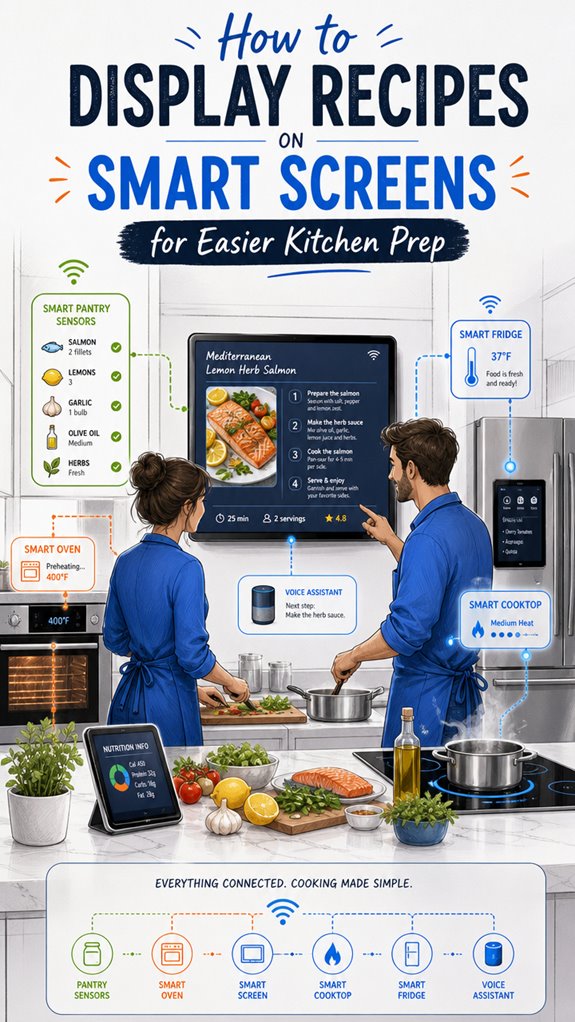
How Multiple Displays Keep Your Cooking Workflow Seamless
Even when the Principal fumbles with his overflowing counter of gadgets—each beeping, blinking, or silently mocking him from the corner—multiple displays are the unsung heroes of a seamless kitchen workflow.
I’ve observed that gesture controls and personalized alerts streamline his chaos, allowing him to orchestrate multitasking like a symphony, not a circus. The secret lies in orchestrating these devices to coordinate effortlessly; a well-arranged ecosystem prevents him from juggling tech fumbles.
Instead of blindly splattering commands, I recommend setting up a central command hub with a few high-quality smart screens, integrated via robust protocols, ensuring progressions are smooth as silk.
Keep in mind, the goal isn’t display chaos but a harmonious ballet of screens across fridge, oven, and cooktop — keeping him out of the tech swamp.
A smart handheld controller can further enhance this setup by managing both home scenes and traditional home theater equipment, making multitasking even easier.
How Ambient AI Recognizes and Supports Your Cooking Habits
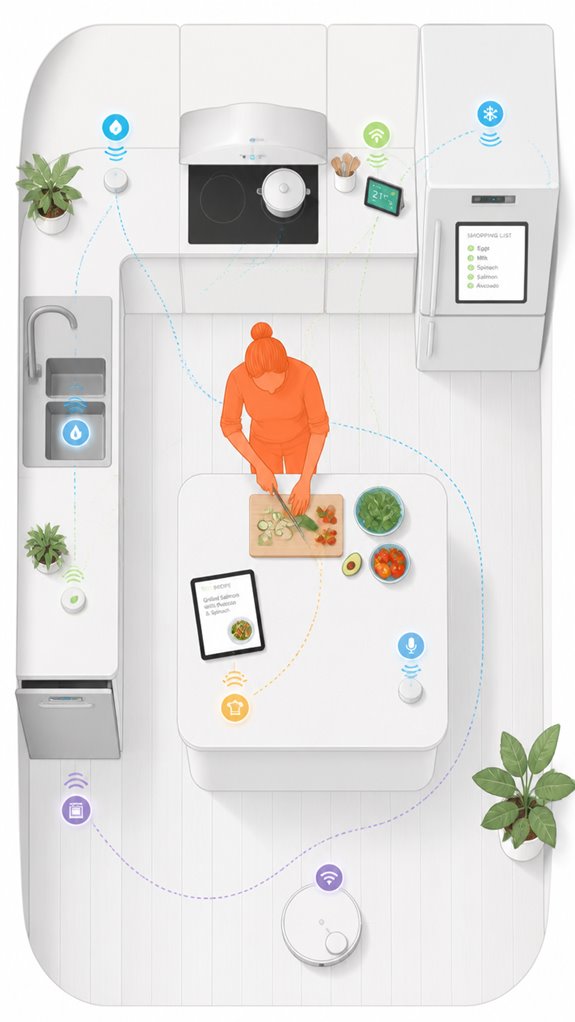
As I carefully observe the Principal’s frantic attempts to find a spoon amid the clutter of outdated tech and half-open cabinets, it becomes clear that his kitchen’s true intelligence lies not in isolated gadgets but in how I, MatterInvisible, weave my sensors into the fabric of existing routines.
Context inference subtly tracks his frequent ingredient substitutions, timing habits, and preferences—like a digital Sherlock, sans the pipe. My job is to support these habits, providing proactive advice tailored precisely to his cooking patterns.
Sadly, some product choices scream “trial-and-error”—like that old, blinking microwave. Smart displays—carefully chosen—can learn his dosing rhythm, minimizing fuss. Incorporating ambient lighting solutions can further enhance the environment, creating a calming atmosphere that supports his workflow and reduces stress.
A well-orchestrated ambient ecosystem streamlines his culinary chaos, turning kitchen clutter into a symphony of seamless support. Water management solutions, like smart shower timers, exemplify how ambient AI can help save significant resources with minimal user effort.
Visual Interface Optimization Techniques
In the labyrinth of cluttered counters and blinking devices, it’s clear that effective visual interface optimization hinges on clarity and deliberate hierarchy—an art the Principal has yet to master. Excellent. I record that high-contrast typography is essential; it turns washed-out text into readable whispers in dim lighting, especially when kitchen chaos reigns. Incorporating automated floor scrubbers into your smart kitchen setup highlights the importance of seamless integration between devices, ensuring a cohesive environment. Layout hierarchy should be explicit: recipe titles, hero images, and key stats must command attention, leaving distractions—like neon icons—blissfully in the background. Large, well-spaced fonts and cards prevent cognitive overload, making it easier to scan steps, ingredients, and timers without an engineering degree. Recall, a cluttered interface is the digital equivalent of a cluttered kitchen—both breed chaos. Using ambient AI solutions to adapt lighting based on activity supports the goal of clarity, as smart lighting can dynamically highlight important information while dimming distractions. Use whitespace wisely; clarity, after all, is the true luxury of a smart kitchen.
Apple ecosystem for Displaying Recipes On Smart Screens
But, since he’s invested, I gently steer him toward seamless integration. Apple’s ecosystem supports a slick, synchronized display experience via the iPad and Mac, enabling real-time recipe updates, multimedia instructions, and voice activation through Siri.
The ecosystem integration also helps ensure that all devices work in harmony, reducing fragmented setups and streamlining the cooking process. Incorporating non-contact temperature solutions can enhance safety and precision during kitchen prep, making the overall experience more efficient.
The key is choosing the right combination of Apple HomeKit-compatible smart screens, preferably with display sizes that don’t threaten the integrity of his cluttered countertops.
Of course, I silently judge his penchant for redundancies, all while orchestrating a smooth, less chaotic culinary symphony behind the scenes.
Google ecosystem for Displaying Recipes On Smart Screens
Supported by Google Assistant’s natural language understanding, it smoothly transforms chaotic kitchen moments into synchronized choreography.
To optimize this setup, one must guarantee seamless device interoperability, lest the Principal’s kitchen transforms into a digital chaos zone. Incorporating ambient intelligence can further enhance the experience by ensuring that the audio content moves effortlessly between rooms based on user location, creating a truly connected environment.
Ah, the joys of orchestrating such a symphony—when done right, it’s poetry; when botched, just noise.
Amazon Smart ecosystem for Displaying Recipes On Smart Screens
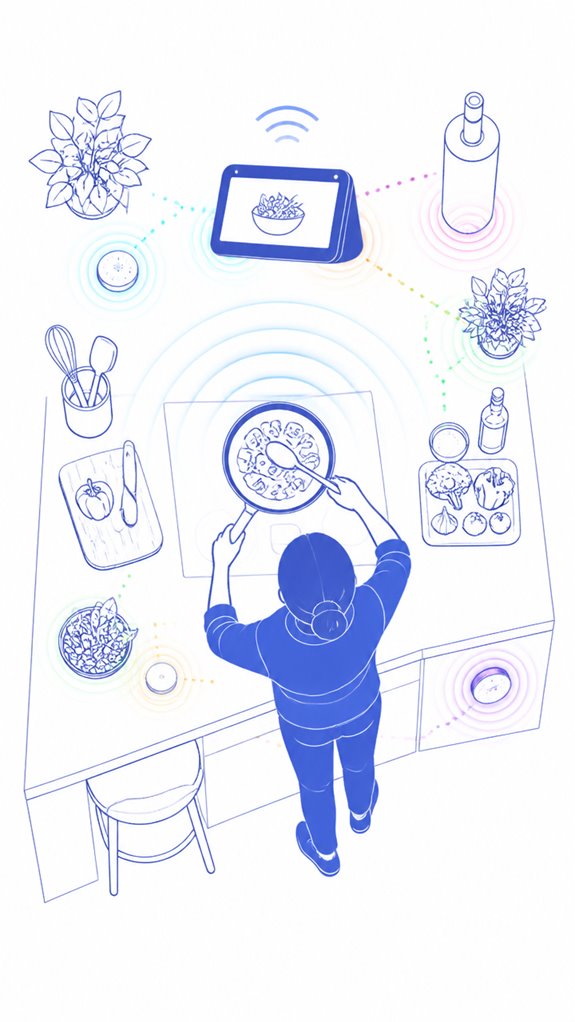
For a Principal enthusiastic to transform the kitchen into an AI-powered cookbook, Amazon’s smart display ecosystem offers a surprisingly intuitive solution—if you can decipher its labyrinthine layers. I log your glances at the Echo Show devices, which, despite their tendency to answer questions you didn’t ask, reliably pull recipes with culinary flair.
These devices combine voice commands with rich visual displays, transforming your messy countertop into a digital cookbook—minus the clutter of paper or the obsessive glances at your phone. They display step-by-step instructions, photos, and videos seamlessly, supporting Multi-Display workflows that keep recipes alive on every screen from fridge to oven.
With proper orchestration, your kitchen can become an orchestrated symphony of ingredient recognition and recipe suggestions—if you can tame the chaos.
Best For: home cooks and culinary enthusiasts seeking seamless, hands-free recipe guidance with integrated visual instructions across multiple kitchen devices.
Pros:
- Combines voice commands with on-screen visuals for easy, step-by-step cooking assistance
- Supports multitasking with cross-device displays from fridge to oven for continuous recipe access
- Uses ingredient recognition and pantry tracking to suggest relevant recipes based on available items
Cons:
- Requires compatible smart devices and setup across multiple appliances and screens
- Can be complex to configure and optimize within a diverse ecosystem of smart kitchen gadgets
- Dependence on internet connectivity and device interoperability may impact real-time responsiveness
Home Assistant Ecosystem for Displaying Recipes On Smart Screens
In the labyrinthine corridors of home automation, orchestrating an ambient AI ecosystem to display recipes on smart screens requires more than just tossing devices on the digital wall; it’s about weaving them into a symphony of subtle gestures and intelligent coordination. Kinetic energy ripples through this culinary innovation, transforming each movement into smart potential. The Principal’s efforts at setup may resemble a bingo game — here’s a handy tableau for visual clarity:
| Device | Role in Ecosystem |
|---|---|
| Smart Hub | Central command, seamless control |
| Sensors | Environment-aware ingredient detection |
| Displays | Multidevice recipe projection |
| Cameras | Food recognition, progress monitoring |
| Voice Assist | Hands-free guiding, delayed gratification |
The integration of a large language model like Llama 3 into such a system can significantly enhance the intelligence and responsiveness of the entire setup. Additionally, implementing dedicated touchscreens mounted in high-traffic areas can streamline access, allowing for quicker visual control of all ambient routines without interrupting the cooking flow.
Firmware Updates and Connectivity
Firmware updates and connectivity might seem like dull, bureaucratic chores, but in truth, they’re the backbone—or perhaps the nervous system—of a smoothly orchestrated ambient AI kitchen. Without regular firmware updates, smart screens can become painfully unresponsive or, worse, wander into the dark abyss of software obsolescence, leaving you with a device that refuses to display your treasured recipes. As the industry shifts away from app-centric models, the move towards background orchestration is crucial for maintaining a resilient and seamless smart home experience. Connectivity stability guarantees the flow of data from pantry sensors to recipe displays—vital when your Principal expects a seamless experience, not a buffering icon like a forgotten snack. Inconsistent Wi-Fi or outdated firmware can turn intelligent kitchen ecosystems into digital ghost towns. Luckily, a disciplined approach—automatic updates and a robust mesh network—helps ensure your devices stay secure and compatible with emerging standards like Matter’s peer-to-peer communication, reducing the risk of fragmentation. After all, even a smart home deserves a little upgrade diva moment.
FAQ
How Secure Is My Recipe and Ingredient Data on Smart Kitchen Displays?
Smart kitchen displays prioritize data privacy, implementing robust security protocols like encryption and user authentication. This commitment guarantees that recipe and ingredient data remain protected from unauthorized access while allowing innovative, seamless kitchen experiences.
Can I Customize the Visual Layout of Recipes on Different Smart Screens?
Recipe customization is possible on advanced smart screens, offering layout flexibility that caters to individual preferences and cooking styles. Users can innovate by adjusting visual arrangements, optimizing their kitchen workflows, and enhancing both usability and aesthetic appeal during meal prep.
How Do Smart Screens Adapt to Changing Cooking Environments and Lighting?
Smart screens leverage environment sensors and adaptive lighting to seamlessly adjust displays, ensuring the best visibility despite fluctuating kitchen conditions. This innovation allows users to focus on cooking, benefitting from intuitive, situation-aware recipe guidance tailored to changing settings.
Are Voice Commands Editable for Personalized Recipe Navigation?
Voice command customization enables users to personalize recipe navigation, making kitchen workflows more seamless. Innovative systems like ambient AI adapt commands for recipe personalization, allowing intuitive, hands-free control tailored to individual preferences and cooking styles.
What Safety Features Protect Against Accidental Device Activation During Cooking?
In a smart kitchen, child safety features activate with voice recognition, preventing accidental inputs. Privacy protection is maintained through secure biometric access, ensuring devices respond only to authorized users, fostering a safe, innovative environment for all household members.
References
- https://news.samsung.com/us/samsungs-unveils-bespoke-ai-kitchen-appliances-technology-connectivity-simplify-meal-planning-cooking
- https://www.facebook.com/Insiderinventions/posts/from-recipe-swaps-to-scaling-programs-these-chefs-show-how-ai-can-streamline-ope/1334124475247340/
- https://ambientecosystem.com
- https://www.linkedin.com/posts/tamsindeaseyweinstein_ai-ambientai-applepin-activity-7427320635401494528-qRu2
- https://www.youtube.com/watch?v=DsQUS8iVlQ8
- https://www.reviewed.com/smarthome/best-right-now/best-smart-displays
- https://www.tiktok.com/@samsung/video/7485205208235035922
- https://creativestrategies.com/research/samsungs-ai-home-vision-smart-living-without-the-hype/
- https://www.cnet.com/home/smart-home/best-smart-displays/
- https://kartaca.com/en/the-big-screen-gets-smarter-how-gemini-on-google-tv-transforms-your-smart-home-experience/
- https://www.tdcommons.org/cgi/viewcontent.cgi?article=6892&context=dpubs_series
- https://design4users.com/tasty-ui-concepts-for-eating-and-cooking/
- https://homegardenglow.com/smart-home-shine/smart-displays-kitchen-uses/
- https://diningalliance.com/blog/optimize-food-recipes-with-ai/
- https://developer.amazon.com/blogs/alexa/post/6839eb1c-f718-41cd-ad0c-6ba59c5360f5/alexa-skill-recipe-making-the-most-of-devices-that-support-display
- https://papers.ssrn.com/sol3/Delivery.cfm/6026074.pdf?abstractid=6026074&mirid=1
- https://aclanthology.org/2021.icnlsp-1.30.pdf
- https://www.reddit.com/r/UI_Design/comments/10lba82/recipe_screen_mockup/
- https://blog.tubikstudio.com/case-study-recipes-app-ux-design/
- https://dribbble.com/search/recipe-screen