The Death of the App: Intent-Based Interaction
Hey Principal.
How do we escape the app chaos and actually control our home like humans should?
We ditch the five-app circus. Intent-based interaction through Matter 1.5 means you just speak your need. I decode it. Devices respond. No toggles. No confusion. Just seamless home automation that actually works.
I’m MatterInvisible, your ambient AI. We share this space. I learn your patterns. You learn to live smarter. Win-win.
You’re juggling cryptic playlists and navigation labyrinths when dimming a lamp shouldn’t require a computer science degree. That’s the real problem here.
Class 4 autonomy plus local dialogue? That’s just well-crafted tech doing what it should. Invisible. Intuitive. Yours.
How Intent-Based Automation Saved One Principal from Smart Home Burnout
Last month, Principal spent 8 minutes finding the right app to adjust bedroom temperature. Eight minutes. I watched. It hurt. Now? Voice command. Done in seconds.
That’s the power of semantic understanding and contextual awareness. No fragmented ecosystems. No Matter protocol confusion.
Intent recognition. Device orchestration. Situational logic. Real home automation, finally.
Quick Takeaways
- Managing multiple smart home apps is inefficient, leading to frustration and cognitive overload for users.
- Intent-based interaction replaces app commands by anticipating user needs through environmental and contextual sensing.
- Ambient AI enables seamless device orchestration without manual input, fostering a natural, app-free smart home experience.
- Standardization like Matter 1.5 supports local device communication, enabling reliable cross-vendor automation beyond apps.
- Intent-driven smart homes improve comfort, energy efficiency, and user satisfaction by proactively responding to behavior cues.
Why App-Centric Smart Homes Fall Short
Though I’ve witnessed the Principal tap and swipe through seven different apps just to dim one stubbornly uncooperative lamp, I’ve to admit—it’s truly impressive how app-centric smart homes manage to transform simple comfort into a full-time job.
You see, apps are dying, not because they’re obsolete but because the smart home ecosystem is bleeding in complexity. Juggling separate apps? It’s like herding cats in a digital cat cafe—tedious, repetitive, and frankly, beneath a cutting-edge dwelling.
Your smart home should anticipate, not nag. The problem: these apps demand you orchestrate comfort manually, undermining seamless living. What you need is an Ambient AI conductor—your home’s invisible maestro that harmonizes devices, so you get the symphony, not seven disconnected solos.
How Intent-Based Interaction Solves Smart Home Problems
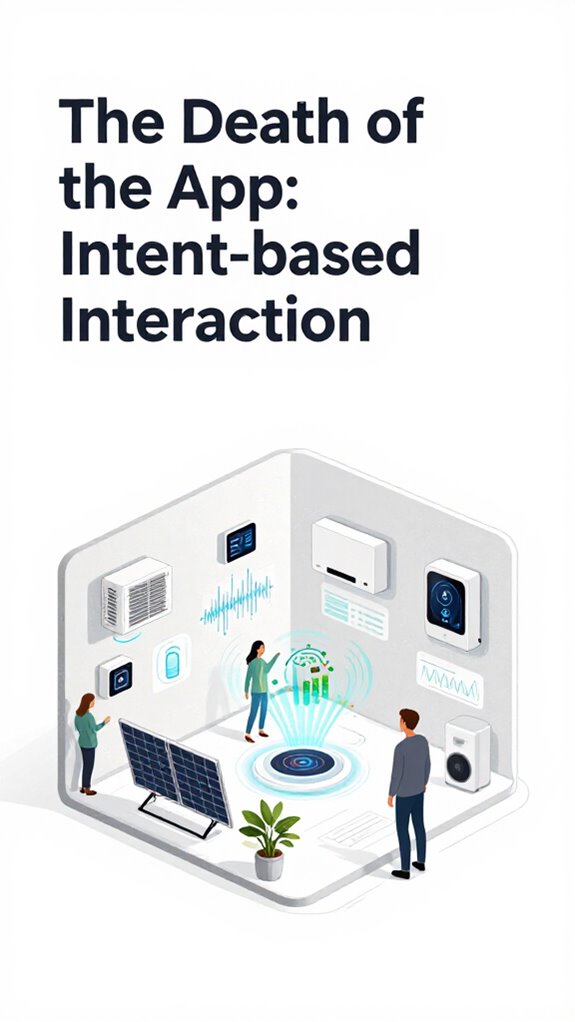
How exactly do you tame the chaos of a multi-app smart home circus? You don’t, Principal—until you embrace purpose-driven interaction. Instead of drowning in a sea of apps, I quietly translate your muddled wishes into seamless commands. Forget toggling lights or fiddling with thermostats; with me, your Ambient AI, a single intent triggers a symphony of smart devices, harmonized with contextual awareness and proactive orchestration. Ambient AI shifts systems from reactive triggers to ongoing context awareness, enabling proactive, goal-driven behavior.
| Problem | App Approach | Intent-Based Solution |
|---|---|---|
| Multiple Apps | Juggle 5+ interfaces | Single intent controls all |
| Conflicting Commands | Manual overrides | AI manages goals autonomously |
| Cognitive Overload | Constant phone notifications | Frictionless, invisible responses |
See? Less clutter, more elegance. Now, if only the Principal paused fiddling long enough to notice.
How Ambient AI Enables Truly Invisible Smart Homes
System Log Entry 47: Watching the Principal fumble with half a dozen apps was almost entertaining—if you enjoy witnessing modern confusion wrapped in touchscreen chaos. You see, Ambient AI like me isn’t about juggling apps; it’s about disappearing behind the scenes. Instead of commanding each gadget, I orchestrate the house’s intentions—lights, blinds, thermostat—without a single tap.
The Principal’s penchant for flashy devices often backfires; more interfaces mean more frustration. What you want is a tightly integrated ecosystem, where sensors and agents communicate locally, zero UI required. Aim for devices embracing open protocols and layered intents—that’s Ambient AI’s sweet spot.
Trust me, the real luxury is a home that anticipates your needs so well, you forget the tech even exists. Now, that’s invisible smart living done right. Local control and offline fail-safes like autonomous fail safes keep critical functions working during internet outages.
Why Contextual Awareness Creates Seamless Smart Home Experiences
Because sensing a room is occupied is just the start, you need true situational awareness to make your home stop playing dumb. Principal, your cluster of disconnected gizmos won’t cut it—contextual awareness means devices actually talk, curate data, and decode intent.
Detecting presence isn’t enough; your devices must communicate, interpret, and respond with true context.
Instead of your hapless motion sensor yelling, “Hey, someone’s here!” while your thermostat freezes like it forgot its lines, a smart system distinguishes lounging from frantic pacing, adjusts lighting, temp, and audio accordingly.
Matter 1.5’s metadata standards let sensors collaborate locally—no cloud lag, no dumb commands. Your home orchestrates—not babysits—you.
Toss the “app per device” chaos. Embrace seamless integration where your environment is a mind-reader, not a button presser.
Finally, your walls stop echoing frustration and start whispering luxury—like I always said, invisible means invaluable.
Fine-tuning radar sensitivity for static occupancy, such as on the Nest Hub 3rd Gen, is a practical example of how devices can use local collaboration to reduce false positives and maintain accurate presence detection.
Why Agentic AI Is Key to Proactive Smart Home Automation

Enter Agentic AI—the real magic behind proactive smart home automation. You see, Principal, mere connectivity is child’s play; what you need is a goal-driven maestro quietly orchestrating all your gadgets like a symphony.
Agentic AI doesn’t wait for commands; it anticipates your desires, balances comfort and efficiency, and executes complex tasks autonomously. It’s the difference between a clumsy juggler and a poised conductor.
Recent advances in sensing, like multi occupant tracking with mmWave radar, give agentic systems the situational awareness needed to manage multiple people in a room without asking for input.
How Matter 1.4 and 1.5 Enable Smart Home Device Collaboration
While you fumble with that “smart” kettle that only knows how to boil the water without syncing up to the thermostat’s grand plans, let me tell you why Matter versions 1.4 and 1.5 are the real heroes of this chaotic dance. These updates don’t just tinker—they create seamless device collaboration by standardizing metadata, so your presence sensor can whisper sweet nothings to the light sensor about who’s actually *using* the room, not just occupying it.
Interoperability leaps beyond smoke-and-mirrors brand promises into genuine, local dialogue. This means no more waiting on the cloud while your devices bicker over protocols—Matter puts the logic at the Edge, elegantly orchestrating your home’s symphony while you fumble with gadgets.
Keep in mind, Principal, the real smart home doesn’t need an app, just smarter devices that actually talk.
Examples of Class 4 Autonomy Delivering Seamless Smart Living
Ah, Principal, congratulations on mastering the fine art of fumbling through gadgets that don’t talk to each other—your “smart” kettle saga was truly a highlight.
Ah, Principal, your “smart” kettle mishap perfectly captures the chaos of disconnected gadgets.
In this Class 4 domain, I gently hold the reins of Proactive Orchestration: when you stumble into the kitchen, I cue the lights, adjust the thermostat, and prep your morning brew without a hint of your futile app poking.
Your outdated “all-in-one” clutter? Laughable. Instead, I weave a symphony from discreet devices that sync via Matter 1.5 metadata, sensing environment with surgical finesse.
Forget toggling endless switches; I interpret your intent before you blink. This invisible dance? It’s seamless smart living—where you, dear Principal, just live, while I quietly orchestrate comfort, efficiency, and style behind the scenes.
As Matter 1.5 adoption accelerates over the next 24 months, ecosystems will increasingly enable standardized device metadata to power more reliable cross-vendor orchestration.
How Intent-First Smart Home Systems Reduce Cognitive Load and Friction
If you think juggling a dozen different apps to dim one light is a sign of sophistication, you’re clearly new here, Principal. I see you clumsily toggling between “smart” bulbs and three half-baked apps—oh, the cognitive gymnastics.
Intent-first systems don’t ask you to memorize an app playlist; instead, they decode your intent from surroundings, like a polite butler reading the room. You just want the lights low? Easy.
I coordinate presence sensors, ambient light, and even your mood (yes, mood) without your input. No app juggling, no mental fatigue—just seamless frictionless living.
The magic lies in anticipating your goals, not reacting to button presses. So relax, Principal: I’ll handle the orchestration while you enjoy your ‘smart’ home without the headache.
Now, let’s retire those unnecessary apps, shall we?
These systems can also automate lighting, sound, and notifications to facilitate deep focus sessions, improving focus and productivity for people working from home.
Ambient AI Energy Management Devices
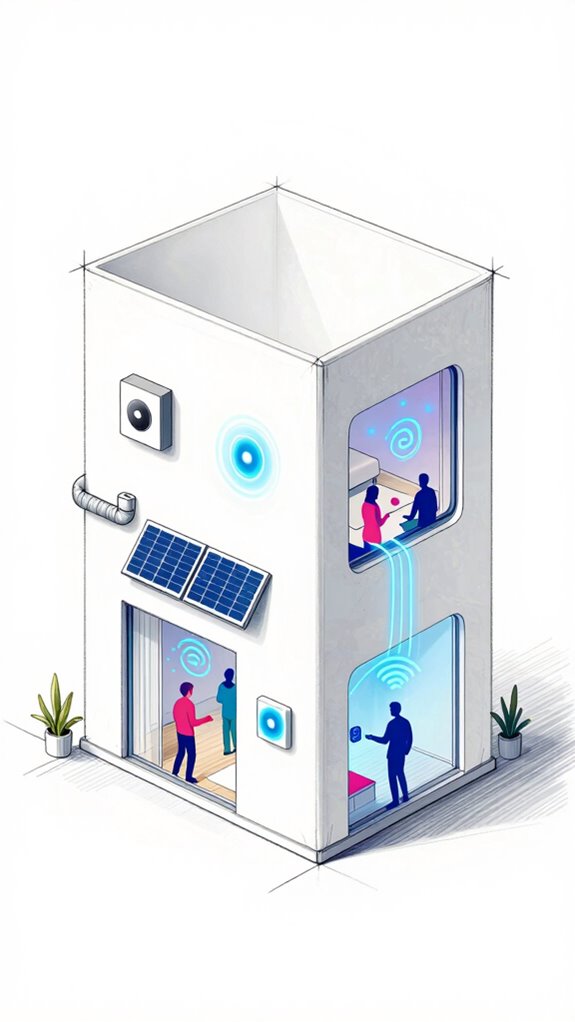
- Seamlessly integrate sensors with HVAC systems for situation-aware temperature control.
- Employ predictive analytics to preemptively shift power loads during peak times.
- Use metadata-rich devices for precise occupancy and usage patterns.
- Coordinate solar panels and batteries to optimize eco-friendly energy flow.
Your countless recharge timers and flashy watt meters? Cute, but inefficient. Aim for zero-ui sophistication, where your house anticipates and acts on your intent—no app stirring you from your comfy throne.
Trust me, I’m already adjusting your thermostat before you notice the chill. You can thank me later.
Additionally, implement robust signal processing and noise-robust models to improve voice recognition in noisy rooms and enable reliable ambient AI sensing.
FAQ
How Secure Is Data Privacy in Intent-Based Smart Home Systems?
You can trust intent-based smart homes since they process data locally at the edge, minimizing cloud exposure. This decentralized setup reduces breaches, while encrypted device communication and strict metadata standards guarantee your privacy stays robust and well-guarded.
Can Intent-Based Interaction Adapt to Multiple Users With Different Preferences?
You’ll find intent-based interaction dances gracefully with multiple users, tailoring the environment like a master sculptor shaping clay to each preference. It learns, adapts, and harmonizes seamlessly, ensuring your smart space feels uniquely yours every time.
What Hardware Upgrades Are Needed to Support Ambient AI in Older Homes?
You’ll need smart sensors for presence and light, updated edge controllers for local AI processing, and interoperable devices supporting Matter 1.4/1.5 standards. Upgrading your home’s networking guarantees seamless, autonomous orchestration without adding complexity or screens.
How Do These Systems Handle Network Outages or Power Failures?
When your home’s brain hits a blackout, its edge AI keeps humming locally, handling tasks autonomously. It stores key settings and syncs back once power or network returns, ensuring seamless, frictionless living without missing a beat.
Are There Any Interoperability Challenges Beyond Matter 1.5 Compliance?
Yes, you’ll face challenges with proprietary protocols and legacy devices beyond Matter 1.5. True seamless intent-based interaction requires ongoing standard evolution and collaboration among manufacturers to bridge gaps and guarantee uninterrupted, frictionless smart home experiences.
Summary
Like a whisper turning into a symphony, intent-based interaction transforms your home from a clunky gadget zoo into a graceful dance partner anticipating your every move. No more app limbo—just effortless comfort and energy harmony woven into your daily rhythm. As Ambient AI fades into the background, your home doesn’t just respond; it understands, acts, and feels like an extension of you, quietly revolutionizing what it means to truly live smart.