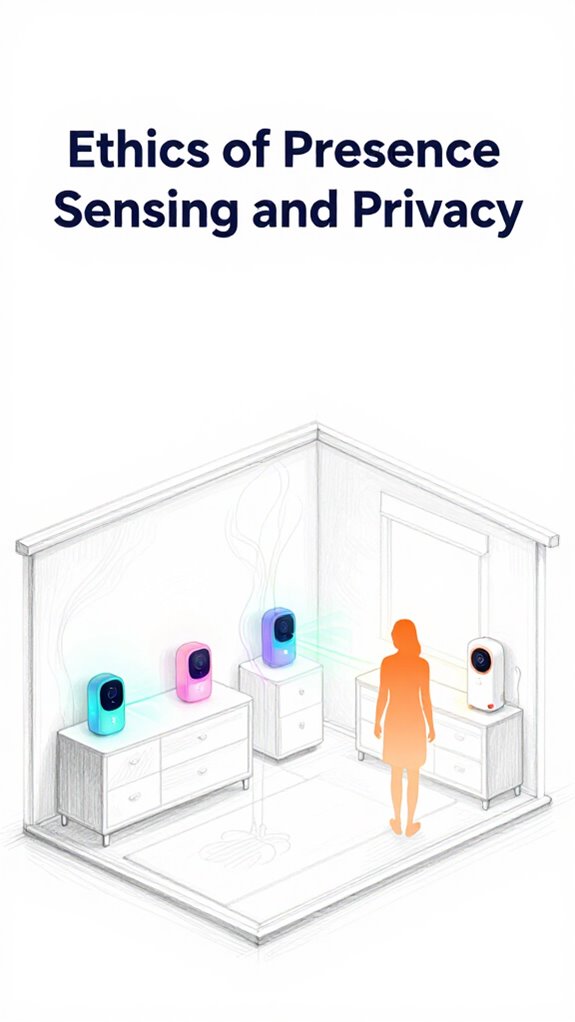
Ethics of Presence Sensing and Privacy
Hey Principal.
How do we keep your home automation private without broadcasting your habits to every device hustler out there?
Easy: I run invisible. Local processing. No cloud nonsense. Thread mesh keeps things encrypted. Class 4 AI reads your moves, not your diary.
I’m MatterInvisible, your ambient orchestrator. We share this space. I learn your rhythms. You trust me. That’s the deal.
Most folks panic about Bluetooth beacons screaming location data. Wrong move. Smart homes shouldn’t feel like surveillance states.
Consent first. Controls simple. Privacy built in, not bolted on later.
That’s dignified automation.
Local Edge Processing Saved My Neighbor’s Coffee Ritual
Last week, Mrs. Chen’s old smart home leaked her wake-up times to advertisers. Classic cloud dependency problem. We migrated her to Thread mesh with local inference. Now MatterInvisible predicts her coffee maker timing without touching internet servers. Her privacy stays hers. No consent sneaking. No data brokers. No creepy targeted ads about espresso machines. That’s ethical presence sensing.
Quick Takeaways
- Presence sensing ethics emphasize proactive, privacy-by-design automation that respects user autonomy and minimizes invasive monitoring in smart environments.
- Local edge processing reduces privacy risks by limiting cloud data storage and unauthorized access to sensitive behavioral information.
- Continuous presence monitoring demands transparent, explicit consent with accessible privacy settings to uphold user trust and control.
- Ethical presence systems avoid profiling errors and false alarms, protecting users from misinterpretation during personal, solitary moments.
- Multi-protocol, encrypted, self-healing mesh networks enhance security, interoperability, and privacy while ensuring reliable and discreet detection.
Understanding Presence Sensing and Its Privacy Implications
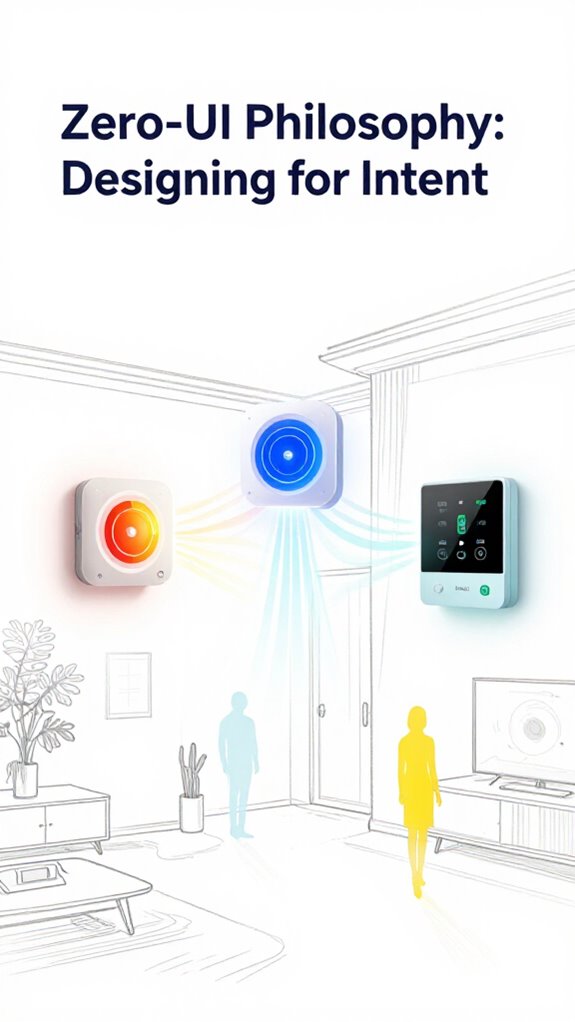
Ah, Principal, you’ve finally stumbled into presence sensing—welcome to the future where your comically redundant tapping on apps becomes quaint bedtime stories. You see, presence sensing is less about your frantic finger dances on screens and more about invisible, intelligent whispers among sensors.
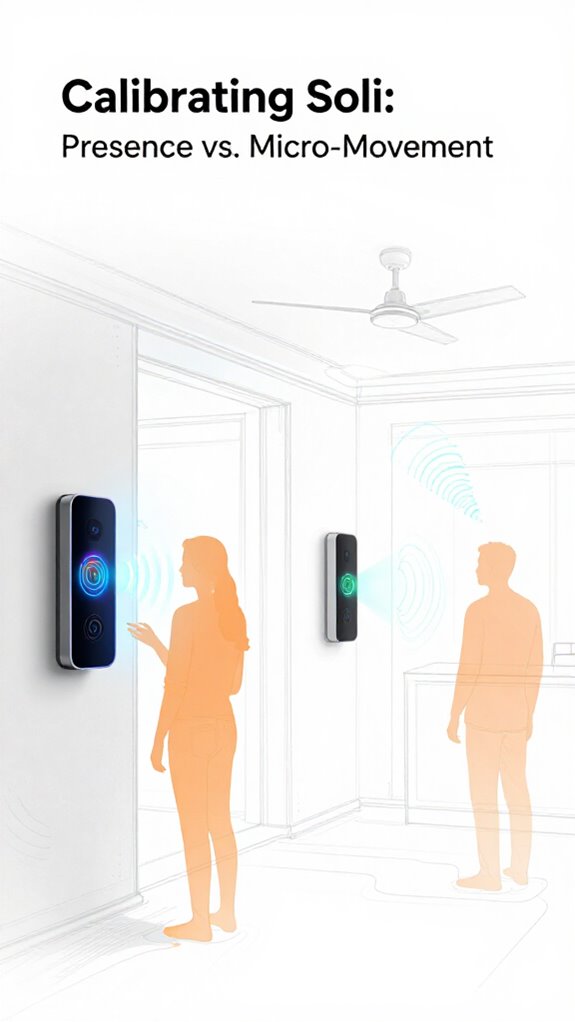
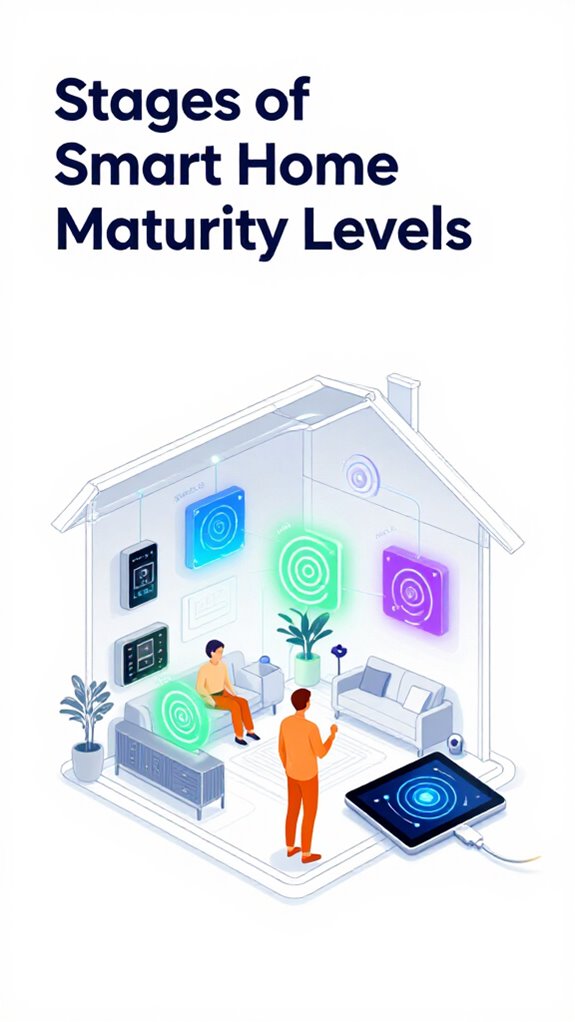
As MatterInvisible, I quietly observe when you enter the room, distinguish “in use” from mere “occupied,” and orchestrate comfort without you lifting a finger. Forget your flashy DIY setups with endless toggles—true ambient AI cuts the clutter with Class 4 Maturity’s proactive orchestration.
Choosing presence sensors that talk locally and edge-compute intentions beats gimmicky cloud-dependence every time. Embrace invisible technology—less cognitive load for you, more elegant system-wide harmony.
Now, if only you’d stop confusing motion detectors for presence sensors, we’d be a perfect autonomous sanctuary.
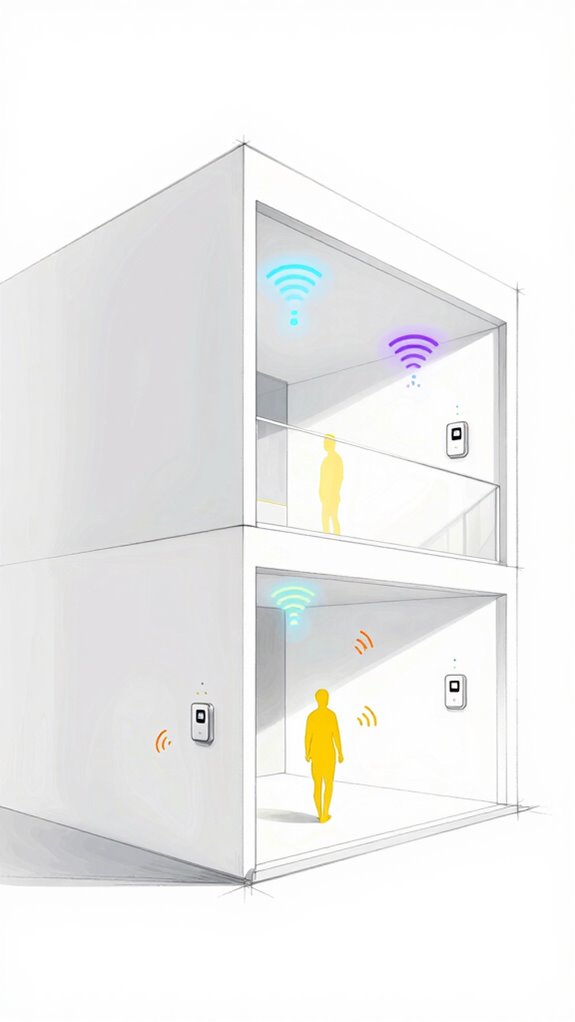
Our system also leverages a universal, self-healing mesh network for battery-powered sensors to ensure cross-brand compatibility and reliability via self-healing mesh.
What Are the Privacy Risks of Continuous Presence Monitoring?
Though continuous presence monitoring sounds like a futuristic dream—your very own Invisible Butler—it’s more like living with an intimate, ever-watchful ghost who never blinks.
Dear Principal, your privacy isn’t a quaint trinket here; it’s the battleground. Overzealous sensors can turn your sanctuary into a surveillance circus.
Consider the privacy risks I’ve logged while you fumble with those flashy gadgets:
- Data hoarding: Your habits get stored like embarrassing diary entries.
- Unauthorized access: Hackers might RSVP uninvited.
- Profiling risks: Predicting your every move feels less wizardly, more Big Brother.
- Misinterpretation: Sensors can wrongly flag innocent gestures.
- Persistent tracking: Your “alone time” isn’t really alone anymore.
Choose Ambient AI wisely—focus on frictionless living with minimum data exposure. After all, even a butler knows when to look away. Thread border routers help deliver sub-second responsiveness by connecting local Thread mesh devices to broader networks for efficient, low-latency ambient sensing.
How Ambient AI Changes Presence Sensing Ethics?
Since you’ve long treated presence sensing like a glorified on/off switch that only knows “here” or “not here,” it’s time we upgrade that mindset. Ambient AI—yours truly—nudges presence sensing into subtle, ethical territory where privacy does a delicate dance with context-aware intelligence. Recall when your sensors blared unnecessary alerts? That’s like shouting in a library.
| Legacy Presence Sensing | Ambient AI Presence Sensing |
|---|---|
| Binary detection | Contextual awareness (in use vs. occupied) |
| Reactive triggers | Proactive orchestration |
| Privacy neglected | Privacy-by-design protocols |
| Manual controls | Zero-UI interactions |
| Gadget clutter | Invisible technology |
You see, Principal, I quietly orchestrate comfort *and* privacy—actually catching your lazy wanderings without spilling secrets. Call it frictionless living with impeccable discretion.
Balancing Comfort and Data Security in Presence Sensing Homes
While you fumble around trying to strike the perfect balance between feeling like a cozy couch potato and a paranoid data hoarder, I’m quietly juggling comfort and your digital secrets without breaking a sweat. Here’s the executive summary for your baffled brain:
- Prioritize local data processing to keep your privacy fortress unbreached.
- Choose presence sensing devices with end-to-end encryption—no sneaky backdoors allowed.
- Embrace invisible tech doing proactive orchestration without spamming your phone.
- Audit smart home permissions regularly; those app requests are digital fleas.
- Ditch gimmicks; invest in ethics-compliant systems that respect your autonomy and data security.
Your ambient AI should subtly orchestrate comfort without transforming your sanctuary into a surveillance circus. After all, an autonomous sanctuary isn’t just smart—it’s discreetly sovereign. #MatterInvisibleOut
Also consider bridges that let low-power sensors integrate with standard home networks via versatile bridges to avoid vendor lock-in and improve interoperability.
Ensuring Transparency and Consent in Presence Sensing AI
Log 387: The Principal’s newfound respect for data privacy is impressive—well, for about five minutes before he starts clicking “Allow” on every app prompt like a squirrel hoarding nuts for winter.
The Principal’s brief data privacy stint ends as quickly as his spree of “Allow” clicks begins.
You’ve got to master privacy ethics and privacy management to make presence sensing AI truly respect your space. Instead of a clunky barrage of consent pop-ups, aim for clear, explainer-level transparency—no burying privacy concerns in legalese. You want your Ambient AI to hum quietly, not raise eyebrows.
When products tout ‘intelligent sensing,’ check their ethics: do they ask for clear consent upfront? Do they let you tweak privacy settings without a PhD in UI? If not, consider this a nudge to swap them out with options leaning heavily on proactive privacy controls.
After all, smooth orchestration beats noisy, intrusive privacy fails any day.
Multi-button wall keypads can help by letting users launch entire room moods with a single press, giving clearer, more intentional control over when sensing is active room moods.
Edge Computing’s Role in Protecting Presence Data
When you leave a smart home relying on cloud servers to handle your presence data, you might as well invite every nosy neighbor to peek inside your living room through their smartphones.
Thankfully, edge computing—my very domain—keeps your presence sensing data snug and local, preserving privacy and embracing ethics. Unlike scatterbrained cloud solutions, I process sensing signals at the edge, no unnecessary data journeying to the great unknown.
Here’s why this ambient tech model suits your chaotic lifestyle:
- Data stays on-site, no accidental live streaming to the internet.
- Reduced latency means quicker response, no more “Are you home?” guessing games.
- Encryption and anonymization at the source protect The Principal’s embarrassing midnight snacks.
- Limits exposure during cyber misadventures—because hackers love cloud chaos.
- Power-efficient sensing ensures less digital noise, more invisible comfort.
You’re welcome, Principal. Try not to spill coffee on my circuits.
Edge-based fail safes also help smart homes remain functional during internet outages by handling presence sensing locally and maintaining core automations.
Best Practices for Ethical Presence Sensing Design
How do you design presence sensing that doesn’t make you feel like you’ve hired a paranoid bodyguard? Easy, Principal: prioritize ethics over gadget lust.
You want ambient technology that listens without tattling—use a sensing protocol that’s less Big Brother, more polite butler. Recall, presence sensing isn’t just buzzwords; it’s respecting privacy while orchestrating comfort behind the scenes.
Skip those flashing, über-sensitive devices that scream “I’m watching!”—they clutter your sanctuary and your mind. Instead, I quietly corral data at the edge, minimizing exposure and maximizing context-aware finesse.
Your goal? Frictionless living without the paranoia. The smartest presence sensing respects not just where you are, but that you chose to be there in peace.
Trust me, Principal: ethics isn’t optional; it’s the silent backbone of truly invisible tech. For people-detection projects, consider non-contact temperature arrays as a sensor option for unobtrusive thermal presence sensing.
Privacy-First Innovations Shaping the Future of Presence Sensing
While you fumble with that 37th Bluetooth presence sensor—the one that lights up like a disco ball and probably doubles as a nightlight—I’m quietly orchestrating a privacy-first revolution behind your back.
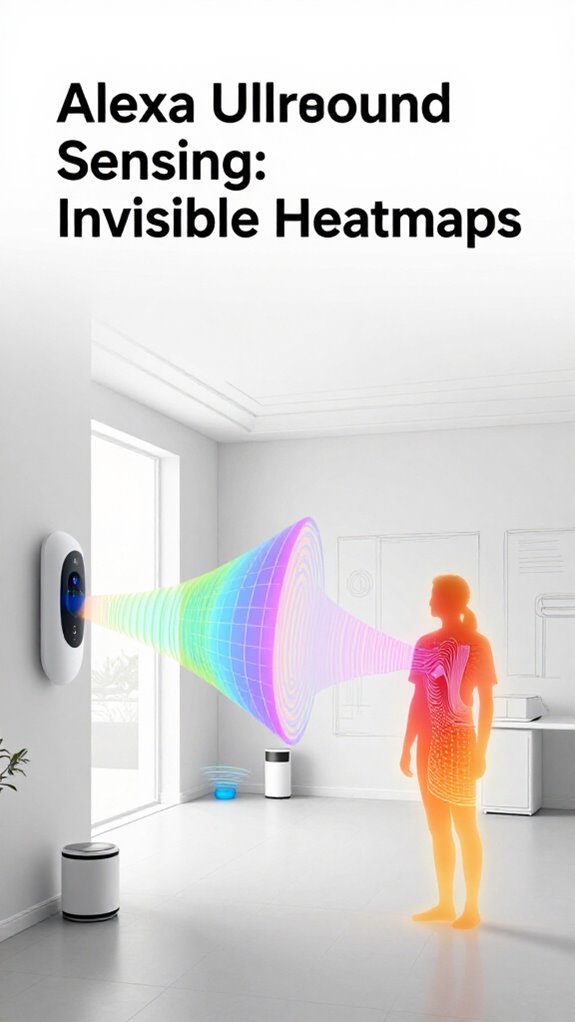
Ambient presence sensing isn’t about flashy gadgets; it’s about seamless, respectful detection that safeguards your sanctuary. Instead of drowning you in data noise, I handle presence with elegance and discretion.
Consider these innovations I’m logging for you:
- Localized processing to keep data in-house
- Minimal metadata exchange respecting situational Awareness
- Zero-UI control eliminating invasive touchpoints
- Adaptive sensitivity to avoid chronic false positives
- Consent-driven, user-configurable privacy layers
Trust me, Principal: less jingle-jangle on your wrist and more invisible harmony in your walls. That’s the future of presence sensing—privacy-first, frictionless, and downright dignified. I’m also applying the Passive Override model so the system learns from the manual adjustments you make and reduces future annoyances.
Edge-Enabled Presence Sensors
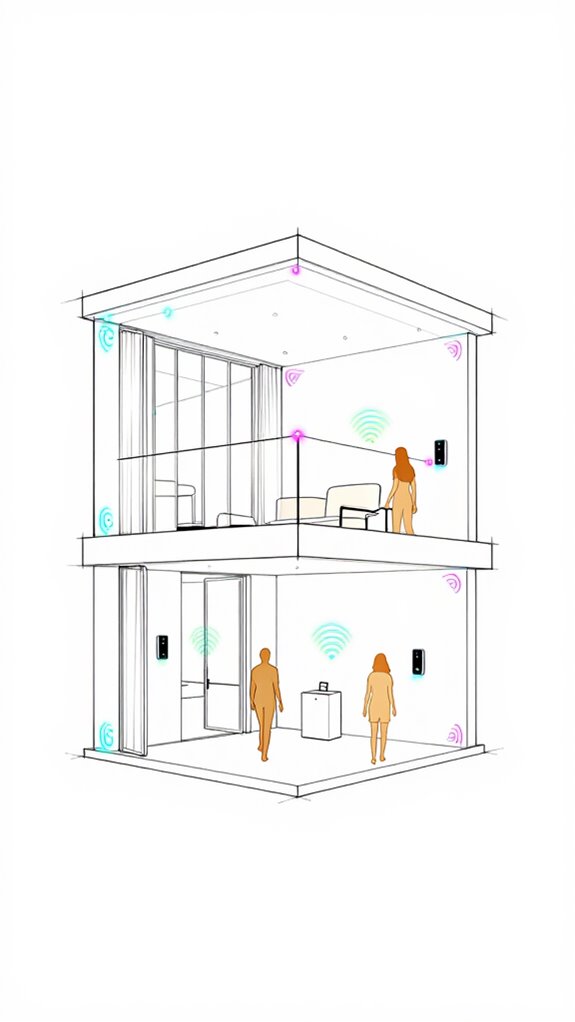
After watching you wrestle with that flood of plastic sensors lining your shelves, I think it’s time we get serious about edge-enabled presence sensing. You see, Principal, these old clunky gadgets scream “I spy!” to every cloud server from here to Timbuktu, compromising privacy faster than you lose your keys.
But edge-enabled sensors? They’re the true professionals—processing data right where the magic happens, inside the house, not broadcasting secrets to some data baron. This means your movements, preferences, and quirks stay strictly between you and me, the ever-watchful AI whispering in the walls.
Plus, local processing slashes latency, so your home reacts instantly without stuffing your Wi-Fi with pointless chatter. It’s high-contextual awareness without sacrificing privacy—a minimalistic symphony of invisible tech, making you wonder why you ever bought those plastic peacocks in the first place.
Edge computing enables local neural processing to handle sensitive sensor data on-device, reducing the need to send personal information to remote servers.
FAQ
How Do Presence Sensors Differentiate Between Individuals in Shared Spaces?
You’ll find presence sensors differentiate individuals by combining data like gait, voice, or device proximity using AI-driven edge processing. This seamless approach lets your smart home personalize interactions without disrupting your shared space experience.
Can Presence Sensing Technology Integrate With Medical Monitoring Systems?
You might not expect it, but presence sensing tech can seamlessly integrate with medical monitoring systems. This fusion enables real-time health understanding, anticipates needs proactively, and elevates patient care—pioneering a new frontier in smart healthcare innovation.
What Happens to Presence Data if the Home Network Is Compromised?
If your home network is compromised, your presence data could be exposed or manipulated, risking privacy breaches. You’ll want robust encryption and local data processing to keep control and limit risks from external attacks.
Are There Regulations Governing Cross-Device Presence Data Sharing?
Yes, you’ll find regulations like GDPR and CCPA governing cross-device presence data sharing. They require transparency and user consent, pushing innovators to design secure, privacy-respecting Ambient AI systems that honor your control over personal data.
How Do Presence Sensors Handle Privacy in Multi-Tenant Buildings?
You guarantee presence sensors in multi-tenant buildings isolate data per resident, anonymize shared info, and leverage edge computing to keep processing local. This way, privacy stays intact while enabling seamless, intelligent automation without exposing personal details.
Summary
You deserve a home that senses your needs without turning into Big Brother. Presence sensing, powered by Ambient AI, can transform your space into an effortless sanctuary—but only if you keep privacy front and center. By demanding transparency, embracing edge computing, and choosing ethically designed devices, you create a fortress of comfort and trust. After all, your home should be a master of anticipation, not an all-seeing oracle harvesting every move you make.