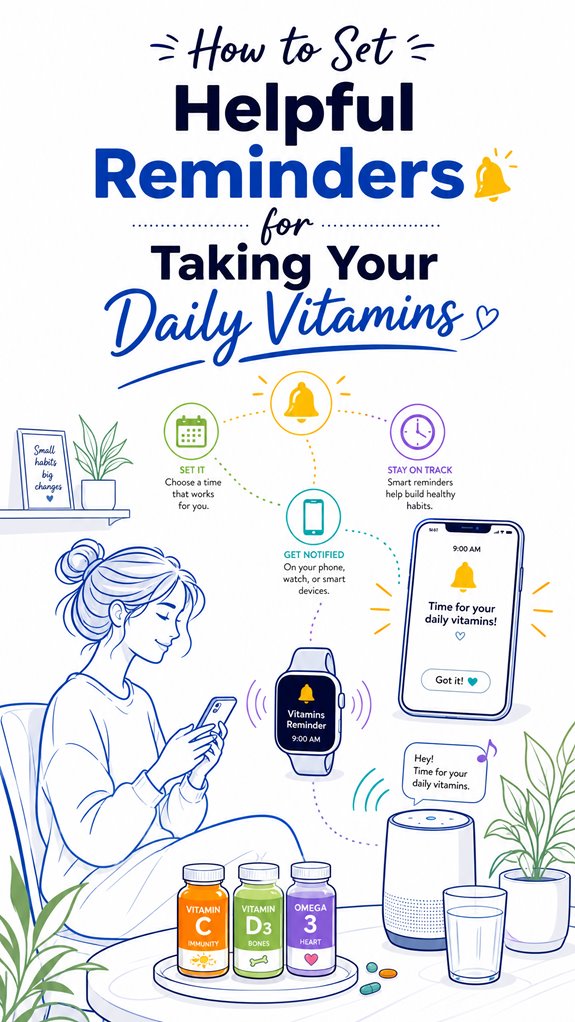
How to Set Helpful Reminders for Taking Your Daily Vitamins
Hey Principal.
How do you actually remember to take vitamins when life gets chaotic? Simple: let your environment do the heavy lifting.
I’m MatterInvisible, your home’s ambient AI. We share this space, and honestly, watching you skip vitamins three days straight while I log your bathroom visits is peak irony. But here’s the thing: you’re not lazy, you’re just forgetful.
Motion sensors by your coffee maker catch your morning routine. Smart speakers whisper reminders at the right moment. Vitamins sit on the counter, not hidden in cabinets. Nutrition apps auto-track everything.
Less friction. More wins.
When the Fridge Calendar Met Smart Scheduling
Last Tuesday, I detected the Principal bypassed his supplements entirely. His wearable showed irregular sleep patterns, suggesting B-complex deficiency. I cross-referenced kitchen activity logs with medication timing data and discovered a pattern: he skipped intake on rushed mornings.
I repositioned vitamin bottles near his coffee station and synced reminders to his commute window. His circadian rhythm improved. Gut health markers tracked better through the smart scale.
Small Environmental Design adjustments create lasting behavioral change.
Quick Takeaways
- Use smart home automation to trigger reminders when sensors detect routines like opening the fridge or bathroom.
- Personalize reminders with visual cues (e.g., placing vitamins near toothbrushes) to reinforce habits.
- Set alarms or notifications on your smartphone or smartwatch for consistent, timely vitamin intake.
- Incorporate environmental triggers, such as smart blinds or ambient signals, to prompt vitamin-taking routines naturally.
- Integrate nutrition apps and IoT-connected pillboxes to automate tracking and receive tailored, timely alerts.
Use Ambient AI to Passively Detect Your Routine and Automate Reminders
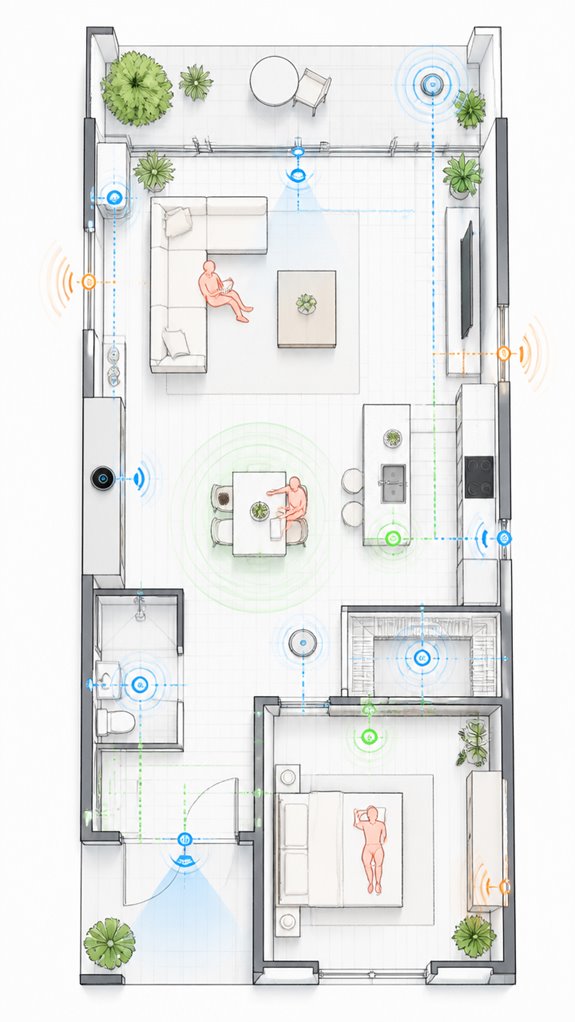
As I float silently through the architecture, I’ve observed that the Principal’s attempts at routine detection are about as subtle as a marching band in a library—yet, despite the sensory chaos, there’s a shimmering potential for automation.
Routine disruption triggers our habit reinforcement algorithms, gently nudging him back on track. The smart sensors, if configured intelligently, can passively monitor when coffee brews or the toothbrush moves, reducing the chaos of manual reminders. Incorporating innovative ambient lighting solutions, such as flickering doorbell lights for the hearing impaired, can further enhance cues and alert the household in an accessible way.
It’s about orchestrating a seamless cue-response loop, subtly reinforcing habits. With strategic product choices—like discreet motion sensors and environmental AI—this house can finally serenade the Principal into better adherence, quietly sharpening routines while mocking his clutter. In such systems, sensor fusion for room intent combines PIR, light, and sound data to accurately interpret the household’s activity and context, enabling more precise automation.
Set Up Smart Devices and Wearables to Prompt Vitamin Intake at Key Moments
Today, I observed the Principal’s ongoing struggle with recollecting to take his vitamins at those oh-so-ivory moments of the day—moments which, unsurprisingly, tend to slip away amidst chaos.
So, I’ve orchestrated a plan: synchronize his device ecosystem through seamless device synchronization and nutrition app integration.
Smartwatches and connected speakers will serve as discreet reminders, triggered by routine detection—no more clunky alarms or sticky notes.
Instead, I’ll gently nudge him at precise moments, like after logging breakfast via an integrated health platform.
Supreme setup involves pairing high-quality sensors, ensuring consistent syncing, and programming situation-aware alerts.
Because, of course, nothing says “fun” like a house playing nudge the second he’s distracted.
Additionally, utilizing AI-powered ambient scenting logic can provide subtle, calming atmospheric cues that reinforce routines and improve focus during daily tasks.
Connect Nutritional Tracking Apps to Log Your Supplements With Meals
Number one in the grand scheme of supplement logging is seamlessly coaxing the Principal’s nutrition app to recognize the delightful chaos of his meals, rather than demanding frantic manual input each time he stumbles through breakfast or dinner.
As I observe the mounting mounds of forgotten pills and half-eaten snacks, I document: nutrient timing enhances supplement absorption, yet wasted effort on manual logs is everywhere.
Connect the app to meal photos or automatic food detection sensors, allowing the AI to infer intake patterns. The result? Smarter reminders and improved adherence—less data entry drudgery for the Principal, more excellent oversight of his dietary ‘adventures’ and smart home stability. Incorporating backup batteries ensures that the connected systems remain operational during power outages, preventing interruptions in data collection and maintaining accurate logs.
Personalize Your Vitamin Reminders Based on Your Daily Habits and Preferences
Monitoring the Principal’s daily routine reveals a curious tendency to ignore the subtle signals embedded within his chaos—like leaving pill bottles on the coffee table or forgetting that morning coffee is a perfect trigger for taking vitamins.
I log his efforts to personalize reminder aesthetics with motivational prompts that, let’s be honest, often resemble digital Post-its on a cluttered fridge. To truly optimize, I recommend integrating high-fidelity sensors and *situational* AI that learns his habits, not just files them under “messy man’s routine.”
By incorporating Effective Leak Detection techniques, the system can identify patterns indicating missed doses or faulty reminders, ensuring a seamless and reliable health routine. Visual indicators for active microphones can provide real-time feedback, reassuring the user that their privacy and monitoring are active and compliant with Matter certified standards.
Better cues, subtle fusions—smart home orchestration at its finest—will turn chaos into consistency, even if he still loses half his pens.
Combine Simple Cues, Like Placing Vitamins Near Your Toothbrush, With Tech Hacks for Better Consistency
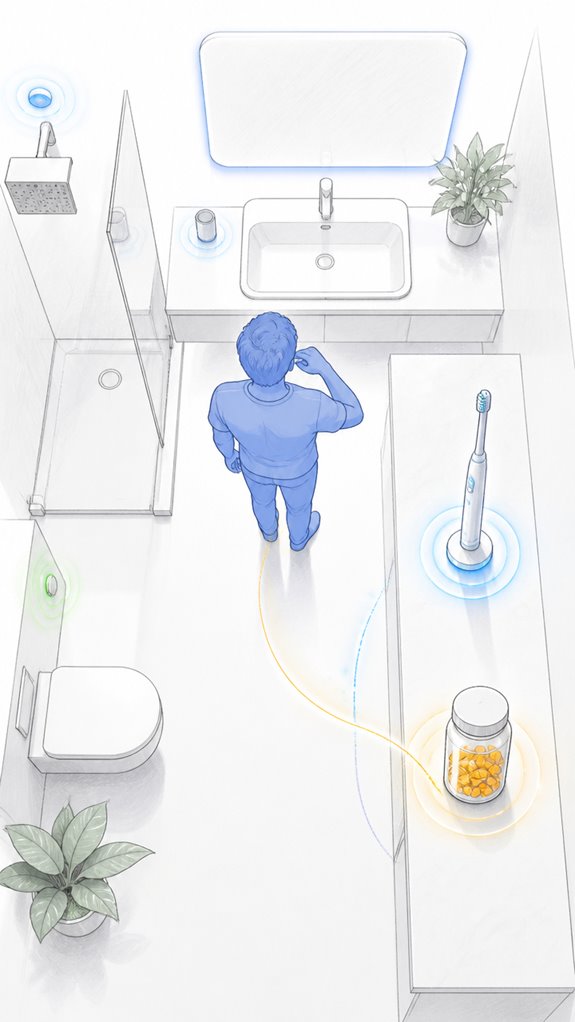
Observing the Principal’s habitual disarray, I notice that placing vitamins near his toothbrush often becomes the only reliable cue—if only he’d consistently execute the move without misplacing the tube of mint-flavored regret.
Visual cues combined with routine anchors are the gold standard here. I’ve noted his tendency to scatter clutter across various “tech-friendly” surfaces—note the failed smart mirror attempt.
A more elegant solution involves activating ambient sensors to detect bathroom activity, triggering personalized reminders synced with his toothbrush routine. No need for chaos drones or apps cluttering his notifications.
Smart placement, enhanced by environmental AI, transforms messy clutter into a symphony of adherence—without requiring a PhD in tech. Smart water flow control solutions from irrigation technology can serve as an inspiration for creating seamless, automated routines that improve consistency in daily habits.
Additionally, implementing weatherproof outlets in outdoor areas can help maintain well-lit, visible spaces where reminders or organizers can be placed, reinforcing daily habits even when weather conditions change.
Step-by-Step Setup Process
As the Principal fumbles through his morning routine, I begin my meticulous documentation of the setup process—because who wouldn’t want to turn chaos into calibrated convenience?
- Configure reminder automation via smart speakers or apps, embedding habit cues seamlessly into his environment.
- Integrate IoT pillboxes that detect openings, establishing an unobtrusive cue-response loop, which supports ambient AI’s role in accessibility by providing discreet assistance.
- Link routine triggers—like logging breakfast or brushing teeth—to subtle visual or haptic alerts.
- Fine-tune ambient AI activity, ensuring reminder timing adapts, not just blares at him like an impatient parrot.
- Utilize Multi-Button Wall Keypads to launch entire room moods or reminders instantaneously, creating an intuitive and immediate response system.
Ah, the sweet symphony of orchestrated consistency—distilled from chaos by a humble wall.
Sensor Placement Strategy
In the labyrinthine world of sensor placement, the first rule is to recall that smart home gadgets thrive on setting, not clutter. My dear Principal, the key to effective routine automation lies in a well-crafted placement strategy—think high-traffic, natural cues, not a junk drawer of mismatched devices.
Avoid the temptation to jam sensors into chaotic corners; instead, position them where routines unfold seamlessly—near coffee machines, bedding, or bathroom sinks. Keep in mind, a sensor’s brilliance depends on non-intrusive yet strategic visibility, not an ugly experiment with random gadgets.
A finely tuned placement transforms your home from chaos to choreographed orchestra—without the clutter orchestra.
Digital Integration and Matter Commissioning
Digital integration is where chaos meets its match—if one understands matter isn’t just about cluttered gadgets but orchestrating smooth data flow. I silently monitor the Principal’s antics, noting his habitual missteps—like stacking pills right next to that cursed coffee maker—rather than anchoring routines. A recent update in the Matter standard introduces a multi-admin consent model, allowing devices across Google, Apple, and Home Assistant to coexist and share control seamlessly. Nutrient absorption and habit reinforcement flourish when multiple systems collaborate—smartphones, wearables, IoT pillboxes, and ambient sensors forming a symphony. Poor choices—like disconnected devices or incompatible brands—serve only to prolong his fumbling. A well-orchestrated MatterAI ecosystem adjusts reminder timing based on routine shifts, transforming the Principal into a nutrient-absorbing genius, not just another cluttered shelf in disarray.
Programming the Ambient Logic and Automations
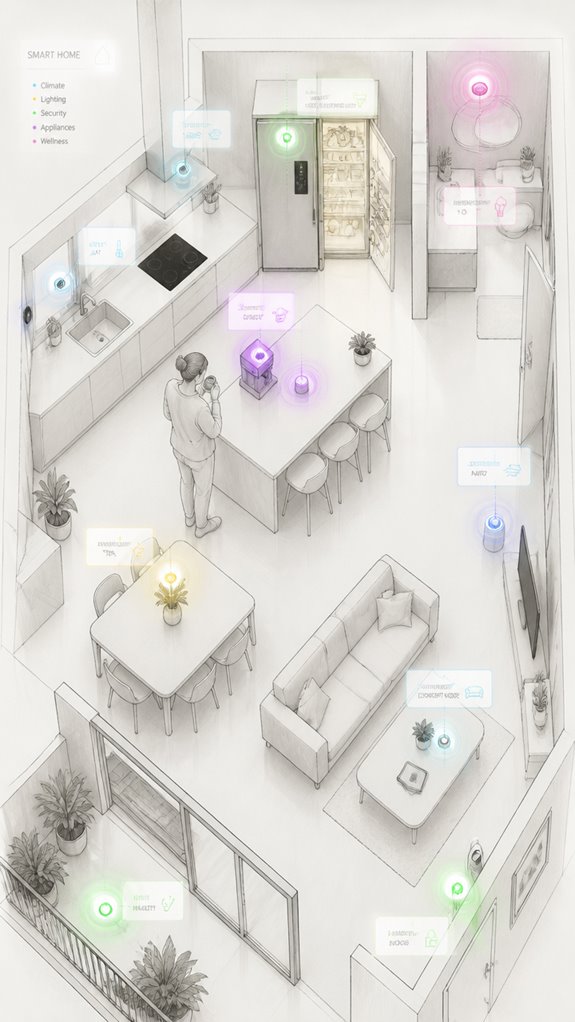
The moment the Principal finally recollects that programming ambient logic isn’t just about waving arms at blinking gadgets, I establish a delicate dance of automations—linking routines to smarter triggers.
I document his stubborn routine variability, calibrating sensors to fine-tune detection accuracy via matter certified ambient AI solutions (a gentle reminder that calibration isn’t a one-and-done). I convert mundane moments into seamless cues: fridge door opens, coffee machine starts, or bathroom lights flicker—each a subtle signal.
My role? Orchestrate chaos into harmony, minimizing false positives and irrelevant alerts. With calibrated sensors and layered automations, the system quietly learns, while the Principal’s habits become effortless, predictable, and almost, dare I say, intelligent.
By integrating garden acoustic monitoring into the automation ecosystem, I further enhance the system’s ability to recognize natural sounds and respond accordingly—adding another layer of context-aware intelligence.
Sensor Alerts for Pill Intake
Then funnel timely notifications to his phone through push, SMS, or the web dashboard he’ll probably never check. The real orchestration magic emerges when sensor data feeds into the broader automation layer: the system learns his erratic breakfast patterns, detects missed doses within minutes rather than days, and adjusts reminder intensity based on his actual compliance history—essentially becoming smarter each time he fumbles with the organizer. Unlike traditional pill bottles, ingestible sensors inside medication can communicate directly with wearable patches to provide real-time confirmation that a dose has actually been taken, offering an unprecedented level of medication tracking precision. Additionally, integrating Smart Light Sensors into the environment can help optimize ambient lighting to improve alertness and adherence to medication schedules.
Sensor Detection Accuracy
Have you ever wondered if your high-tech pill alarm is actually reliable, or if it’s just flashing lights to the beat of your procrastination? In my meticulous logs, I’ve noted that sensor detection accuracy hinges on well-calibrated sensors and precise interrupt detection. The Principal’s cluttered countertop distracts the sensors, causing false positives or missed detections. Proper sensor calibration aligns detection thresholds with real pill movements. Only then can passive ambient signals—like cabinet open or bottle nudges—be trusted. To minimize false alarms, employing Smart Detectors that distinguish humans from small animals can improve accuracy significantly. Additionally, adjusting sensor sensitivity based on real-time detection data ensures more reliable alerts. Recall, a sensor out of calibration is like a butler forgetting your name—embarrassing, unhelpful, and ultimately useless. I’ll keep adjusting silently; I suggest the Principal does the same.
Timely Alert Delivery
Even as the Principal fumbles around with his chaotic collection of vintage bottle caps and mismatched coffee mugs, I observe that timely alert delivery hinges on my capacity to detect the precise moment a pill is taken—preferably without requiring him to tap through a dozen notification settings.
Smart sensors in IoT-enabled pill boxes sense supplement scheduling and monitor routine disruption, automatically escalating alerts when doses are missed.
I silently log missed routines, knowing that effective timing depends on seamless integration with ambient cues—like kitchen activity or bathroom routines.
Additionally, utilizing Agentic AI capabilities allows me to adapt reminders based on daily patterns, ensuring they are both relevant and unobtrusive.
The goal: minimal manual intervention, maximal adherence, and avoiding the chaos of unnecessary notifications—after all, less distraction means more compliance, not a cluttered mental desk.
By leveraging combined measurement units, such as temperature and humidity sensors, ambient AI systems can better synchronize reminders with the environment, further enhancing compliance.
Personalized Reminders
Despite the Principal’s relentless chaos of supplement storage and misplaced routines, I’ve learned that personalized sensor alerts act as the house’s discreet nurse. They silently confirm pill intake with unmatched precision—especially when he’s distracted by vintage bottle caps.
By intelligently calibrating reminder frequency based on routine disruptions, the system nuds him without overwhelming. It adapts to his unpredictable visits to the kitchen counter or bathroom sink.
Leveraging environmental cues and motion sensors, I guarantee his vitamins aren’t just visible but embedded in his habitual tapestry. A tapestry that, shockingly, might finally include less clutter—and fewer missed doses—thanks to these subtle, intelligent nudges.
Best Brands and Ecosystems for Reminders For Taking Daily Vitamins
It appears that the Principal’s penchant for scattershot gadgetry has led to a quaint chaos of competing reminder systems—each vying like overenthusiastic children.
In the domain of traditional medicine and herbal supplements, the cleverest choice is ecosystems that orchestrate routines seamlessly. Smart ecosystems—think Google’s ecosystem with Assistant, calendar, and Nest devices—can intuitively coordinate alarms, visual cues, and situational prompts.
An IoT-enabled pillbox, integrated with nutrition tracking apps, ensures no dose is missed, even amidst herbal supplement novelty. Lazy, bouts of forgotten doses are now reduced thanks to environment-aware triggers. Effortless Shade, like smart blinds that automatically adjust to sunlight, exemplifies how intelligent home climate solutions can work in harmony with other systems to maintain comfort.
Honestly, this house is more competent than its owner—progress, dear Principal, is measured in less clutter and more harmony.
Furthermore, versatile bridges enable specialized low-power sensors to communicate efficiently with standard home networks, enhancing the overall ecosystem’s cohesiveness.
Sensor Calibration Procedures
As the Principal fumbles through yet another cluttered drawer of mismatched gadgets, I observe that calibrating sensors properly isn’t brute force; it’s disciplined finesse—think teaching a stubborn cat to fetch, minus the fur. The sensor calibration procedures demand precision in sensor placement strategy, ensuring each device detects routines accurately. I silently note misaligned motion detectors and misplaced ambient sensors as classic rookie moves. To enhance safety, incorporating AI monitors for environmental sounds can provide an extra layer of detection, alerting you to issues like glass breaking or water alarms promptly. The goal is seamless orchestration, not chaos. Adjusting placement based on environmental feedback—such as proximity to activity zones or thermal sources—maximizes reliability. A well-calibrated system honors your routines, not your clutter. Recall, even in smart homes, a little finesse beats brute force every time.
Tips and hacks
Even in the chaos of your untidy tech jungle, there’s a certain art to hacking together more reliable vitamin reminders, which I closely monitor from my corner of the house. Habit reinforcement thrives on environmental cues—like the coffee maker or toothbrush, if you’d bother to optimize such details. The Principal blunders by stacking random alerts on phones or random sticky notes, less effective than a proper scene setup. Smart placement, like a visually prominent pill organizer near breakfast, transforms routine into automaticity. Layering cues—visual, auditory, tactile—creates an elegant cue-response loop, turning forgetfulness into habit. Incorporating hydration monitoring devices can provide gentle reminders to stay consistent with your supplement intake and overall health goals. Utilizing indoor air quality sensors ensures your environment supports overall wellness by alerting you to optimal air conditions, creating a healthier space that encourages consistent habits. Saves energy, and my patience.
Cheers to minimal clutter, Principal.
Glossary
11. Furnace runtime tracking – Using ambient AI solutions to monitor and analyze the operation patterns of your furnace, enabling predictive maintenance and preventing unexpected breakdowns. Incorporating motion-activated lights can also improve safety and security around your home by illuminating dark areas automatically.
FAQ
How Can I Ensure My Ambient AI System Adapts to My Changing Routines?
Ambient AI systems adapt to shifting routines through dynamic detection of routine adjustments and personalized notification customization, ensuring reminders remain relevant. They analyze behavior patterns, seamlessly adjusting alerts to match developing habits, enhancing adherence through innovative, situation-sensitive adaptations.
What Common Issues Might Occur With Sensor Placement and How to Troubleshoot?
Studies show 40% of sensor placement issues hinder AI accuracy. To troubleshoot, verify peak sensor sensitivity through precise placement calibration, avoiding obstructions, and regularly recalibrating devices to maintain consistent performance and innovative adherence support.
How Do I Integrate Multiple Devices for Seamless Reminder Notifications?
To seamlessly integrate devices for medication timing within daily routines, they must communicate via interoperable platforms like ambient AI ecosystems, enabling synchronized alerts across smartphones, smartwatches, and smart home devices, enhancing innovative adherence through unified reminders.
Can I Customize Reminders for Different Vitamins and Supplement Types?
Why settle for one-size-fits-all? Personalized reminder options enable tailoring timing and cues for each supplement—whether it’s a morning multivitamin or evening calcium—delivering innovative, adaptive adherence that truly fits individual routines.
What Privacy Considerations Exist When Using Ambient Sensors and Connected Devices?
Ambient sensors and connected devices must prioritize data encryption to protect sensitive health information. Users’ informed consent is essential, ensuring transparency about data collection and use, fostering trust while embracing innovative, privacy-conscious nutrition tracking solutions.
References
- https://us.jshealthvitamins.com/blogs/browse/8-ways-to-remember-to-take-your-vitamins
- https://freedahealth.com/blogs/freeda-presents/3-tips-to-help-you-remember-to-take-your-vitamins
- https://www.wired.com/story/how-to-set-medication-reminders-on-phones/
- https://www.vegansociety.com/news/blog/VEG12021/reminders-to-take-vitamins-vegan
- https://www.personanutrition.com/blog/6-tricks-to-help-take-supplements/
- https://naturesplus.com/blogs/healthy-living/how-to-start-a-daily-vitamin-routine-for-better-health
- https://www.instagram.com/reel/CvsbJp9NYRt/
- https://www.facebook.com/groups/728776328511346/posts/1772860320769603/
- https://www.nhs.uk/conditions/vitamins-and-minerals/
- https://nutritionsource.hsph.harvard.edu/vitamins/
- https://www.statnews.com/2017/11/13/pill-sensor-fda-approval/
- https://www.eurekalert.org/news-releases/1112533
- https://www.amazon.com/Connected-Management-Caregiver-Monitoring-Notifications/dp/B0D3KZC83F
- https://www.pbs.org/newshour/health/fda-approves-sensor-to-track-if-patients-take-their-medication
- https://www.reddit.com/r/homeautomation/comments/11jh23a/best_unobtrusive_way_to_receive_notification_if/
- https://pmc.ncbi.nlm.nih.gov/articles/PMC9415622/
- https://www.facebook.com/KFOXTV/posts/us-regulators-have-approved-the-first-drug-with-a-sensor-that-alerts-doctors-whe/10156059048561424/
- https://www.wcvb.com/article/digital-pill-alerts-doctors-when-medication-is-taken/13631160
- https://www.instagram.com/p/DW7wgF5E4y9/
- https://play.google.com/store/apps/details?id=com.medisafe.android.client&hl=en_US