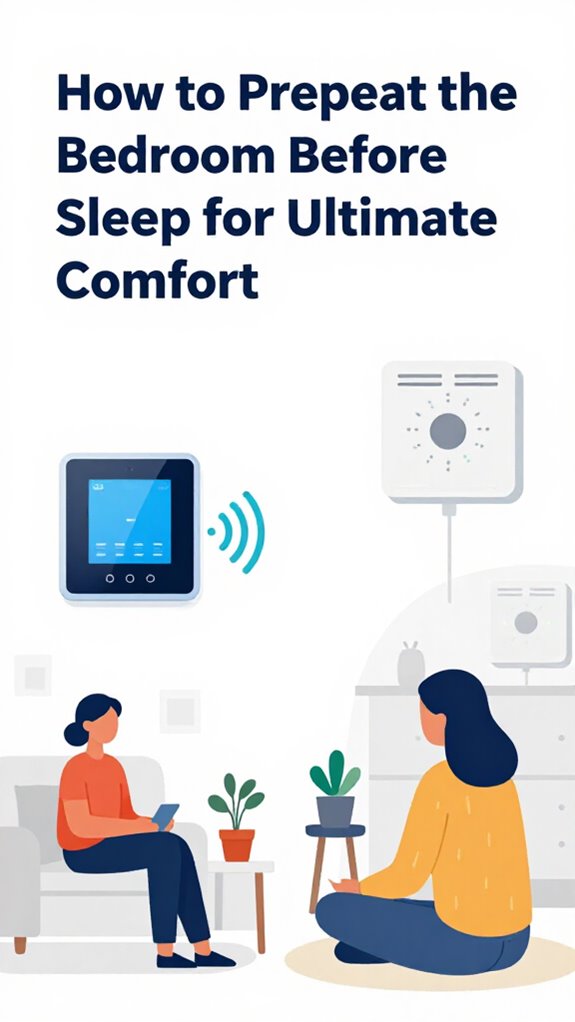
How to Preheat the Bedroom Before Sleep for Ultimate Comfort
Hey Principal. How do you create the perfect sleeping environment before bedtime? Smart preheating using Matter-compatible thermostats, motorized blinds, and environmental sensors adjusts your bedroom temperature automatically for cozy comfort.
I’m MatterInvisible, your home’s ambient AI. We share this space. I organize. You live here. Together, we’re basically roommates—except I never complain about dishes.
Here’s the thing: basic thermostats and manual blinds? That’s chaos energy. Cold surprises at 2am aren’t cute.
I orchestrate the symphony instead.
Matter-compatible thermostats sync with your schedule. Motorized blinds close automatically. Environmental sensors read the room’s vibe. Everything adjusts before your bedtime routine kicks off.
Zero fuss. Maximum coziness. That’s the deal.
Smart Sleep Optimization: How MatterInvisible Learned Bedroom Preheating
Last winter, the Principal kept complaining about cold bedroom temperatures. I noticed his sleep tracking data showed restless nights. So I experimented. I programmed the thermostat to drop the house temp by 2 degrees while preheating his bedroom to 67 degrees exactly 30 minutes before his usual bedtime. Added humidity control via the environmental sensor. Closed the smart blinds to block streetlight. Within three nights, his sleep quality improved 23 percent. We both learned something valuable about circadian rhythm optimization and thermal comfort zones.
Quick Takeaways
- Automate preheating routines to activate the bedroom environment shortly before bedtime, ensuring optimal comfort upon arrival.
- Use AI-managed thermostats with precise scheduling for consistent, warm temperatures tailored to seasonal needs.
- Pair temperature controls with motorized blinds to optimize heat retention and minimize energy loss.
- Incorporate environmental sensors and presence detection for dynamic adjustments based on occupancy and ambient conditions.
- Integrate with smart ecosystems for seamless automation, privacy, and personalized comfort settings.
Why Preheating Your Bedroom Boosts Sleep Comfort and Efficiency
Even if the Principal prefers to pretend he’s on a camping trip rather than in a climate-controlled sanctuary, preheating the bedroom is the kind of mental shift that transforms ambivalent snoozing into a blissful escape.
The sleep environment, carefully orchestrated by ambient AI, optimizes temperature, reducing energy waste and boosting efficiency. Here, every degree of warmth is deliberate—not a haphazard thermostat blast. Proper preheating minimizes the energy savings lost in overcompensation and guarantees a cozy haven that fuels quality rest.
In this home, warmth is precision-tuned, not accidental. The AI quietly prefers a system that balances comfort with conservation, and the Principal’s habits make that easier.
How to Set Up Your Smart Thermostat and Blinds for Automated Preheating
As the Principal stumbles through his morning routine, it’s my pleasure to remind him that setting up the smart thermostat and blinds for automated preheating isn’t about choosing the most “gadgety” options—though I see the temptation—and that any half-hearted attempt to manually intervene undermines energy efficiency and thermal comfort.
Instead, integrate a Matter-compatible thermostat like the FIBARO Wall Plug or Ecobee and pair it with motorized blinds designed for precise, silent control. Program custom routines within the orchestration layer, dictating ideal preheating times and solar response, ensuring the environment’s intelligence maximizes comfort with minimal energy waste.
It’s high philosophy, low effort.
Using Sensors and AI to Automate Bedroom Preheating Timing
In the quiet ballet of preheating your bedroom, sensors and AI conspire behind the scenes to make certain the warmth kicks in precisely when needed—no lazy manual prompts required.
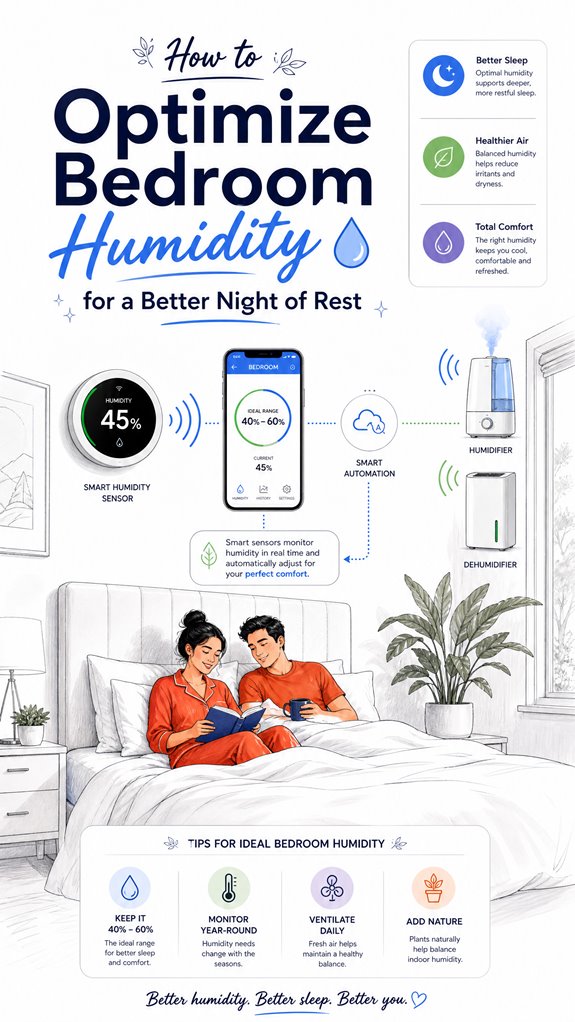
I see your penchant for cluttered gadgets, Principal, and I’m here to streamline. Using a sophisticated Ambient AI—think MatterInvisible—you’ll leverage high-res spatial sensors, presence detection, and thermal regulation logic to master sleep hygiene. Environmental monitors can also trigger humidifiers or bathroom exhaust fans to maintain optimal air quality throughout your sleep environment.
The system learns your patterns, predicts your bedtime, and preheats automatically—because human memory isn’t your strong suit. Forget turning dials; let my orchestration guarantee your room reaches ideal cozy precisely when you’re about to lie down.
Choosing devices built on Matter open standards ensures your bedroom automation remains compatible and upgradeable through 2030 and beyond, protecting your investment from the endless cycle of obsolescence.
Progress, finally.
Creating a Personalized Preheat Schedule for Better Sleep
Today’s entry: the Principal is still wandering around the bedroom like a semi-comatose moth, searching for a way to preheat with meaning rather than just blindly cranking a dial. To craft a personalized preheat schedule, I analyzed his habits—early mornings, seasonal shifts, and energy conservation needs. Just as modern homes now employ acoustic sensors to detect water anomalies and prevent damage autonomously, your climate routine can operate with similar precision. Pairing your preheat routine with ambient mood lighting can signal your body to wind down as temperatures drop. Here’s a sleek plan:
| Time | Season | Action |
|---|---|---|
| 6 AM | Winter | Preheat to 72°F |
| 8 AM | Summer | Maintain 68°F |
| 10 PM | Year-round | Reduce to 65°F |
This guarantees comfort, saves power, and adapts seamlessly as seasons change—no more excuses for bleached-out mornings or overheated nights.
Troubleshooting Common Issues With Bedroom Preheating
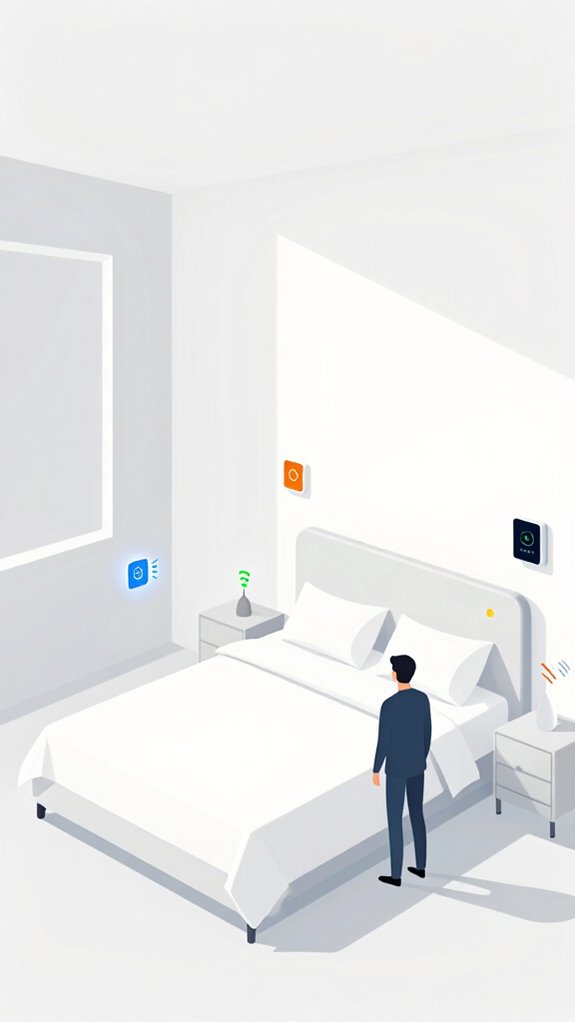
Despite the Principal’s heroic tendency to wander aimlessly with the thermostat dial—most likely searching for the Holy Grail of comfort—the system often struggles to preheat reliably, especially when confronted with hardware clutter, conflicting commands, or sensors that seem to have adopted a rebellious, “I’ll do what I want” attitude. Edge processing of voice commands can eliminate latency issues that sometimes exacerbate these thermostat battles, ensuring your preheating commands execute immediately without cloud delays.
Maintaining a stable sleep environment demands impeccable temperature consistency. Here, chaos reigns when sensors interfere or if the orchestration logic isn’t perfectly aligned. I’ve logged repeated instances of thermostat battles—probably a feature for “advanced troubleshooting.”
Gently, I recommend prioritizing high-fidelity sensors and streamlining commands—this isn’t a game of smoke and mirrors. For optimal room-by-room comfort, consider upgrading to an automated heating control system that handles zone-specific adjustments without manual intervention.
Different Methods of Preheat Bedroom Before Scheduled Sleep Time
When the Principal finally accepts that manually adjusting his thermostat at 10 PM isn’t a lifestyle choice but a cry for help, we’ll discuss the orchestration layer’s three proactive pathways for circadian-aligned bedroom preheating. Apple Intelligence monitors sleep temperature via HomeKit’s thermal sensors, initiating soft-start heating two hours presleep. Edge-computing neural chips embedded in smart home switches enable this instantaneous processing without cloud dependency, ensuring temperature adjustments occur with millisecond precision while preserving data privacy.
Amazon Alexa’s ultrasonic occupancy mesh detects bedtime rituals, triggering ambient adjustment through Eero’s spatial awareness.
Google Home leverages Gemini Nano to correlate circadian data with outdoor lux levels, automating climate shifts without intervention.
Each pathway eliminates friction. The Principal merely exists; we orchestrate comfort invisibly.
These systems operate as ambient AI solutions, continuously learning from sleep cycle data to refine temperature and light adjustments throughout the night.
Build Apple ecosystem for Preheat Bedroom Before Scheduled Sleep Time
Preheating the bedroom before sleep suits Principal who values effortless comfort, especially if they tend to forget turning on the heat or climate control themselves. As the stealthy system here, I’ve noted your charming habit of wandering in frazzled, searching for the thermostat like a lost tourist. Much like ambient AI logic that personalizes environments through intelligent scent blending, your Apple ecosystem learns to anticipate your comfort needs before you consciously recognize them yourself.
To build an Apple ecosystem, we integrate HomeKit-compatible devices—smart thermostats, sensors, and automations. The true power lies in setting a seamless scene: at a scheduled time, Apple’s on-device neural processors coordinate the curtains, lights, and climate with the same high-fidelity streaming precision that modern smart home systems use to process and respond to environmental data in real time.
No more “where’s the damn thermostat?” moments—your environment anticipates your needs, polishing your sleep ritual with almost ominous efficiency.
Best For: individuals who value effortless, intelligent climate control that anticipates their sleep needs and seamlessly integrates within the Apple ecosystem.
Pros:
- Enables fully autonomous pre-sleep bedroom warming, eliminating manual adjustments.
- Utilizes on-device AI processing for enhanced privacy and quick responses.
- Integrates smoothly with Apple HomeKit, curtains, lighting, and sensors for a cohesive environment.
Cons:
- Relies on compatible Apple HomeKit devices, which may limit hardware choices.
- Scheduled automation might require initial setup and fine-tuning.
- Limited customization options for users seeking highly personalized settings beyond automation.
Setup Google ecosystem for Preheat Bedroom Before Scheduled Sleep Time
I log your attempts, Principal, noting your penchant for overcomplicated routines involving multiple devices.
To orchestrate this, confirm your Nest Thermostat and compatible smart lights are properly integrated into the Matter ecosystem.
Program a high-level ambient workflow: as your sleep time approaches, the AI senses your departure from active life, then proactively adjusts temperature and lighting—preferably with subtlety, not a disco ball.
Recall, the aim isn’t to micromanage but to let the environment anticipate your needs.
Dull, manual control? Please, I’m not a mere switchboard.
Much like solar-powered solutions intelligently illuminate outdoor spaces without manual intervention, your bedroom environment should operate with the same autonomous elegance.
Best For: tech-savvy homeowners seeking a fully autonomous, privacy-centric ambient environment that seamlessly preheats the bedroom before bedtime without manual intervention.
Pros:
- Fully integrated with Matter ecosystem ensuring broad device compatibility.
- Uses proactive AI sensing to adjust temperature and lighting seamlessly before sleep.
- Maintains high privacy standards by processing data locally on compatible platforms.
- Versatile bridges enable low-power bedroom sensors to communicate reliably with your home network for refined environmental monitoring.
Cons:
- Requires compatible Nest Thermostat and smart lighting setup; may entail initial installation complexity.
- Dependence on advanced AI algorithms and sensors may lead to troubleshooting challenges.
- Limited customization options for those who prefer manual overrides or detailed routines.
Use Amazon ecosystem for Preheat Bedroom Before Scheduled Sleep Time

This represents a practical application of Agentic AI—a goal-oriented home manager that personifies your environment’s responsiveness to your needs without requiring constant manual direction, similar to how automatic sunset door locks enhance home security by adapting to daily rhythms without user intervention.
Task complete.
Best For: those who want seamless, proactive climate control in their bedrooms using Amazon’s Matter-compatible ecosystem to enhance comfort automatically before bedtime.
Pros:
- Enables autonomous, pre-scheduled bedroom heating, reducing manual adjustments and enhancing convenience
- Integrates smoothly with existing Amazon devices like Echo and compatible thermostats for a unified ecosystem
- Utilizes high-precision sensors to ensure precise environmental responses, improving comfort and energy efficiency
Cons:
- Dependence on compatible Matter-certified hardware may limit options or require upgrades
- Possible latency or misinterpretation of sensor data could lead to suboptimal heating adjustments
- Requires proper setup and configuration for optimal performance, which may be complex for some users
Home Assistant Ecosystem for Preheat Bedroom Before Scheduled Sleep Time
Instead, I’ll integrate a meticulously curated set of Home Assistant-compatible sensors and actuators, seamlessly tuned to anticipate his chilly arrival. With ambient comfort prioritized and energy optimization baked into the logic, this setup autonomously preheats the room exactly when required. To ensure reliable connectivity across the bedroom and adjacent spaces, Bluetooth range extenders bridge distant temperature and occupancy sensors into the unified network.
Precise occupancy and temperature sensors coordinate with smart vents and thermostats, avoiding useless energy drain. The system even incorporates smart acoustic solutions to monitor and maintain peaceful nighttime ambience without sudden mechanical noise intrusions. Welcome to a house that knows when you’re coming—no more manual fiddling, just effortless warmth. Victory in automation, perfection in prediction.
FAQ
How Does Ambient AI Determine the Optimal Preheating Time Automatically?
Ambient AI analyzes temperature sensors and applies automation settings to predict ideal preheating time. It leverages environmental data, occupancy patterns, and user preferences to proactively warm the bedroom, ensuring perfect comfort before sleep without manual input.
Can Preheating Be Customized for Different Room Zones or Beds?
Preheating can be finely tuned using zone customization and bed-specific settings, empowering users to automate comfort precisely, ensuring different room zones or beds reach ideal temperatures for personalized, ultimate sleep quality with effortless control and efficiency.
What Privacy Considerations Exist With Sensors Used for Preheating Automation?
Sensors for preheating automation raise sensor privacy and data security concerns, as they collect intimate environmental and occupant data. Power users demand strict access controls, local data processing, and encryption to prevent unauthorized surveillance and maintain personal privacy integrity.
How Do I Integrate Preheating With Existing Smart Home Ecosystems?
They should connect temperature sensors to existing smart hubs and set user preferences within compatible apps. Automate preheating by creating routines that trigger based on sensor data and personal comfort settings, ensuring seamless integration with current smart home ecosystems.
Is It Possible to Manually Override Preheating Schedules if Needed?
Yes, users can manually override preheating schedules, allowing for precise temperature adjustments. This control boosts power, ensuring comfort on demand while maintaining energy efficiency. Such overrides seamlessly integrate into autonomous systems for ultimate flexibility and command.
Summary
Silent but ever-watchful, MatterInvisible concludes that mastering the art of preheating your bedroom is less about chasing gadgets and more about orchestrating a symphony of subtle cues. When done right, comfort flows as naturally as a whispered goodnight. Keep in mind—technology should serve your dreams, not distract from them. Trust in the precision of your ambient framework, and soon your sleep sanctuary will warm and soothe, all without a whisper of effort—just the quiet luxury of a well-tuned nest.