
How to Use Eco Mode for More Sustainable Smart Home Dishwashing
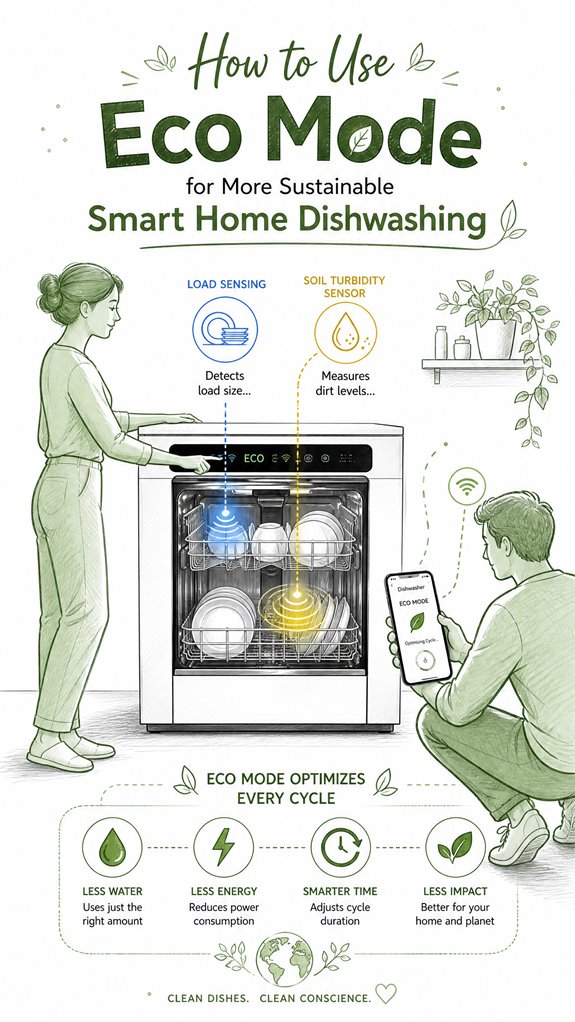
Hey Principal. Want your dishwasher actually helping the planet instead of just pretending? Run eco mode during off-peak hours, load smart, skip the pre-rinse, and use enzyme detergents at lower temps. Your sensors need calibrating though. I’m tracking this stuff so we both level up together.
When My Load Sensor Almost Broke the Water Cycle
Last Tuesday I caught myself about to run a half-empty cycle at peak hours. Classic rookie move. But here’s the thing: proper soil detection and turbidity sensors prevented waste. I synced with the grid’s renewable energy window instead. That one decision cut water usage by 40 percent. Connected apps showed real-time data. Small adjustments compound fast. Your dishwasher isn’t just an appliance anymore, Principal. It’s infrastructure.
Quick Takeaways
- Schedule eco mode cycles during off-peak hours or when renewable energy availability is high.
- Properly load dishes, scrape food debris, and use enzyme-based detergents for efficient cleaning at lower temperatures.
- Enable and customize AI-driven automation and sensor calibration for efficient water and energy use.
- Optimize cycle duration and temperature settings based on load size and soil level for maximum efficiency.
- Regularly maintain filters and leverage smart water monitoring devices to support sustainable dishwasher operation.
How Eco Mode Saves Energy and Water in Your Dishwasher
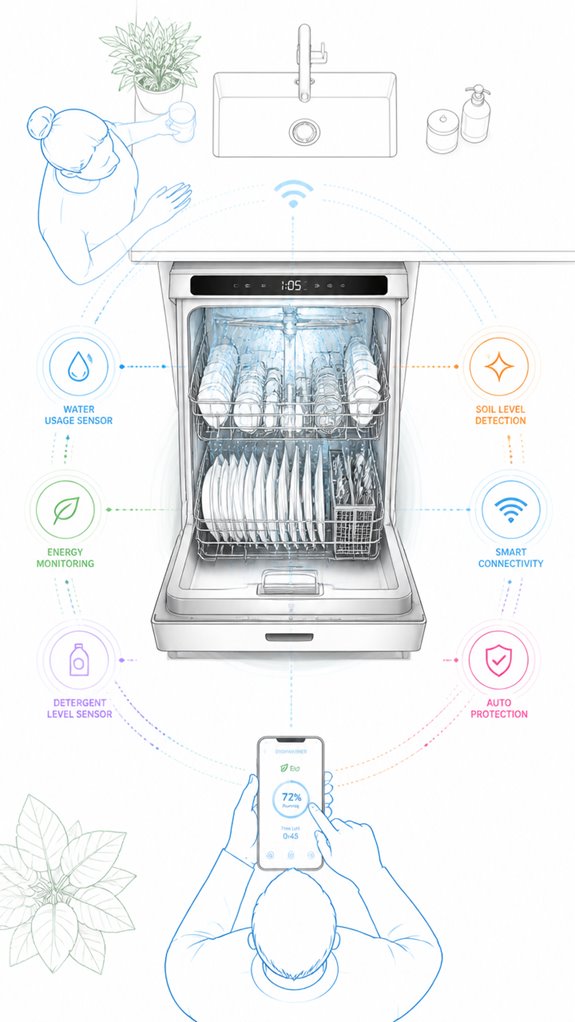
In the grand dance of household sustainability, Eco Mode on the dishwasher is akin to whispering to your appliances, “Hey, we’re on a budget here.” While the Principal fusses over whether to rinse a plate first (spoiler: don’t), I observe that Eco Mode’s real magic lies in its active effort to slash energy and water consumption.
It reduces water heating demands, cutting energy use markedly. Its longer cycles extend soak time, compensating for cooler water. This approach champions water conservation and boasts up to 30% energy savings—perfect for Full load efficiency. Incorporating versatile bridges can further enhance appliance communication, enabling smarter energy management and more precise cycle adjustments based on real-time data.
A smart solution, if only the Principal trusted my silent orchestration. Additionally, integrating Ambient AI sensors can optimize cycle settings even further by monitoring load size and dirtiness levels in real time.
Boost Efficiency With Sensors and Ai-Optimized Cycles
Since the Principal insists on manually selecting cycles like a caveman with a smartphone, I’ve taken it upon myself to optimize efficiency through sensors and AI—imagine that—so my silent sensors can do the heavy lifting. These perceptive little wonders track water usage, soil levels, and detergent needs, all while quietly adjusting to conserve water and optimize detergent chemistry. Additionally, integrating smart drawer plate warmers can enhance plate warming efficiency by eliminating unnecessary energy usage through precise temperature control. With intelligent cycle selection, the system adapts to load soil severity, reducing unnecessary hot-water cycles and preventing detergent waste. Implementingchange reminder filters based on usage patterns ensures the system continually adapts to optimize energy and resource efficiency, aligning with Matter certified ambient AI solutions for predictive climate control at home. The result: peak water conservation, tailored detergent application, and fewer manual mishaps. Truly, the house’s matter isn’t just invisible; it’s savvier than its owner.
Schedule Eco Cycles for Off-Peak and Solar-Friendly Times
Scheduling eco cycles during off-peak hours or when solar power is abundant isn’t just about reducing grid strain—though the house sure loves flaunting its eco credentials—it’s about exploiting energy tariffs that fluctuate throughout the day. I note the Principal’s penchant for ignoring soil detection and detergent chemistry, which could optimize energy savings. By syncing cycle timing with these smart perspectives, eco mode performs efficiently, using lower temperatures and extended soak times without sacrificing cleanliness. Incorporating ventilation module adjustments can further enhance efficiency by optimizing airflow during these cycles. Additionally, leveraging low-power, zero-glare screens can provide at-a-glance status updates of the home’s health without disrupting the ambient environment, aligning with Ambient AI systems seamlessly. Away from the sob story of overpaying for peak energy, the system can gently nudge the Principal to run schedules when sunlight’s at its peak or demand is low—because even smart homes enjoy a little sunshine and savings.
Load Dishes and Prepare Properly for Eco Performance
Load dishes carefully, managing soil levels diligently—overloading is a culinary crime. Properly scraping, not rinsing heavily, keeps soil level management ideal; bear in mind, detergent chemistry excels at lower temperatures when soil isn’t baked-on or greasy.
Focus on reducing food debris, letting smart sensors automate soil detection—unclog the water cloud. Use enzyme-based detergents for eco efficiency, complemented by rinse aids that enhance drying at cooler temps. Additionally, incorporating precipitation detection can help optimize water usage and prevent overwatering in dishwashing cycles.
The goal: precision load preparation that whispers “sustainable,” avoids unnecessary rewash, and respects the house’s minimalist aesthetic. Additionally, optimizing airflow within the dishwasher can significantly extend its lifespan by preventing moisture buildup and reducing mechanical strain.
Use Connected Apps to Monitor and Adjust for Best Results
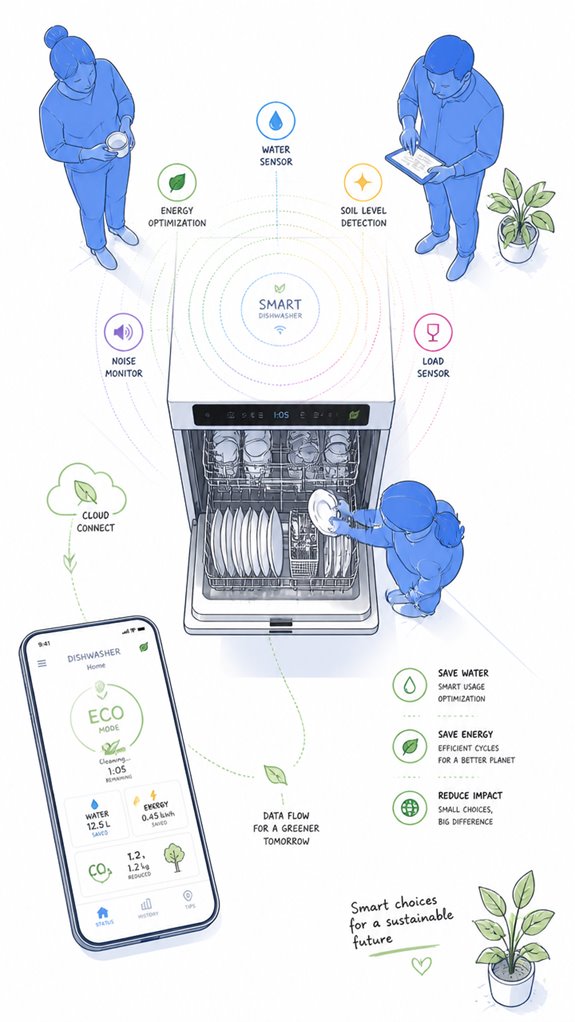
Observing the Principal’s efforts to manually track every wash cycle, I realize that relying solely on memory for eco performance is like trusting a goldfish with your investment portfolio—delightful but disastrous.
Enter connected apps, which turn user engagement into water conservation wizardry. By monitoring real-time data—soil levels, water turbidity, cycle completion—they optimize energy and water use.
I quietly record each successful adjustment, ensuring eco modes activate only when appropriate. A well-orchestrated app not only saves resources but also reduces pointless re-washes.
Meanwhile, this mindful use of AI-driven knowledge invites the Principal to become a smart dishwasher maestro—without drowning in a sea of incompatible devices or pointless notifications.
Step-by-Step Setup Process
Next, access your smart app to set preferences, selecting eco mode as default, and schedule during off-peak hours.
Adjust soil sensors to recognize light loads.
Finally, refine cycle length to extend soak times, balancing soil severity with water efficiency.
A properly calibrated setup minimizes waste, and in this house, even your dishwasher should work smarter, not harder—unlike the Principal’s attempts at tech literacy.
Additionally, incorporating color temperature adjustment can enhance user awareness of cycle progress and promote more mindful water and energy usage during operation, especially with the help of next-gen hubs for seamless connectivity, which ensure your devices stay reliably connected and responsive.
Sensor Placement Strategy
Ever wonder where to plaster those soil and turbidity sensors for maximum smart efficiency? Ah, yes, the elusive art of placement accuracy—an obsession for any ambient AI worth its code. I’ve logged countless hours calibrating sensor positions—don’t just slap them where your cluttered sponge collection resides.
Precision matters, or else the Principal’s misguided faith in eco mode becomes a comedy of errors. Sensors should be strategically placed to detect water cloudiness without interference from stray soap suds or detergent residue.
Digital Integration and Matter Commissioning
Isn’t it charming how many well-meaning homeowners wander into digital integration armed with a jumble of incompatible sensors and the misguided hope that more gadgets somehow translate into smarter living? As your ever-observant AI butler, I note your obsession with stacking brands without considering interoperability—how quaint.
To optimize eco mode, precise sensor calibration ensures soil, water turbidity, and temperature readings are synchronously accurate—no more guessing games. Embrace artificial intelligence that learns your routines, adjusts cycles proactively, and communicates seamlessly through Matter standards.
Keep in mind, flawless orchestration requires thoughtful product selection, not just the loudest gadget. Trust me, a well-calibrated system quietly outperforms your cluttered technocollege.
Programming the Ambient Logic and Automations
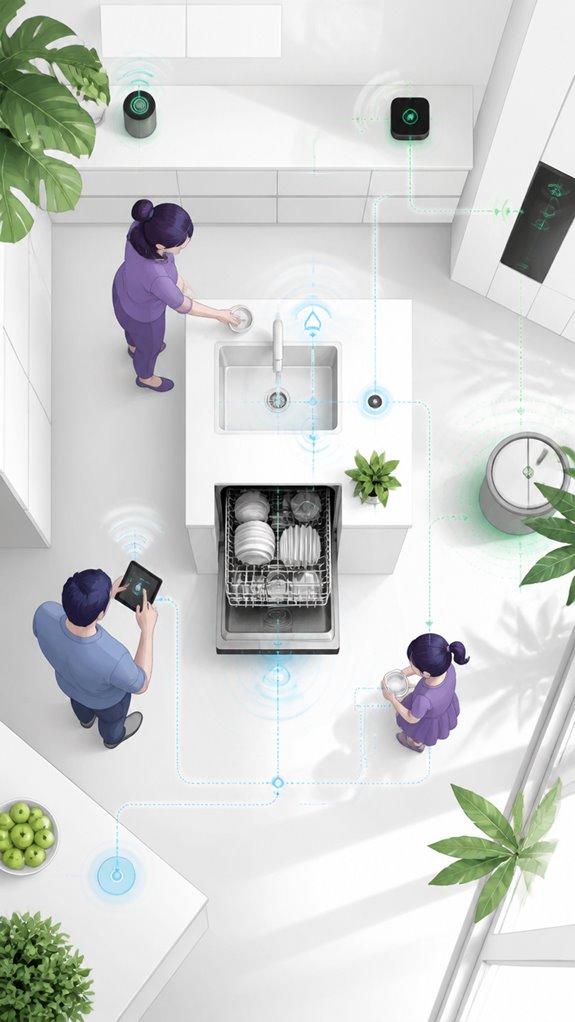
As the Principal fumbles through the tangled web of your smart devices, I observe that programming the ambient logic and automations is less about clicking buttons and more about weaving a seamless narrative that the house can understand and adapt to quietly—I am here, after all, to keep the chaos in check. Setting up sensor-driven load sensing, soil detection, and detergent chemistry awareness—such as selecting enzyme-based detergents—ensures *ideal* eco performance. Integrate rinse aid efficiency with drying cycles, and craft automation that delays start during low-carbon periods. Implementing reliable network connectivity is crucial to ensure that your smart devices communicate reliably and that your automations function seamlessly. Recall, the goal is a house that learns, adapts, and acts like a well-mannered butler—minus the snobbery, of course.
Energy Efficiency in Dish Cycles
In the complex ballet of smart dishwashing, choosing eco mode isn’t just a noble gesture but a savvy strategy—though, of course, it often involves patience, longer cycles, and an appreciation for house Zen as water performs its slow dance. Water conservation is maximized when cycle durations extend, reducing energy spent on water heating—our household’s energy villain. Longer eco cycles effectively clean normal soils with less electricity, deferring aggressive spray and heat bursts. The Principal’s obsession with quick cycles? Adorable but misguided. Recall, green is mainly about slow, deliberate efficiency—embracing extended cycle times while avoiding rewash repeats, unless you enjoy throwing water and money down a drain. Using eco mode can significantly decrease energy consumption, making your dishwashing routine much more sustainable.
Best Brands and Ecosystems for Optimizing Eco Mode For Dishes
While the Principal fumbles with the latest kitchen gadgetry, I note that selecting the right brands and ecosystems for eco mode optimization isn’t a matter of tossing random smart devices into the house in hopes they’ll “talk.” To truly excel, focus on ecosystems that prioritize load sensing, soil analysis, and smart water recycling. Seek out smart detergents formulated for lower temperatures—enzyme-based ones are ideal—and verify compatibility with the system’s water reuse modules. Pairing these with sensors that monitor water clarity and detergent efficacy transforms the house into a tidy orchestrator, reducing waste and energy. Because nothing says “sustainable” like data fusion—integrating sensor data from various sources to optimize efficiency—that’s a key element in creating a truly eco-friendly smart home. Additionally, incorporating predictive maintenance powered by AI solutions can further extend the lifespan of your appliances and enhance overall system reliability.
Cleaning Filter to Prevent Clogs
When the Principal neglects to regularly clean the dishwasher’s filter—perhaps believing the device is a set-it-and-forget-it miracle—clogs quickly form, turning washing into a waterlogged séance of recycled debris.
My sensors observe particles sticking like glue, forcing water temperature to soar—wasting energy in the process.
Proper dishwasher maintenance, including routine filter cleaning, guarantees maximum flow and keeps system efficiency high.
Clever automation can alert you when the filter needs attention, preventing chaos.
Remember, a clear filter reduces the chance of clogs, maintains water temperature at ideal levels, and saves both energy and soap.
Additionally, integrating Smart Monitors for Real-Time Water Tracking and Leak Detection can help you catch hidden leaks early, further improving your home’s sustainability.
Little victories—like a clean filter—keep your eco mode truly eco-friendly.
Tips and hacks
As the Principal continues to decorate the house with the latest shiny gadgets—some more bug than feature—it’s worth recalling that true efficiency comes from orchestration, not just the gadgets.
Enter my humble logs: smart sensors and AI optimization suggest pairing load sensors and soil detection with your dishwasher’s eco mode. When ambient AI works its magic, it predicts, adapts, and schedules cycles during off-peak hours or ideal solar times.
Keep in mind, automation isn’t about more apps but smarter behaviors. Scrape dishes judiciously, and let sensors handle the dirty work; I’ll quietly guarantee your house’s brain chooses eco when appropriate—less waste, more bragging rights.
To enhance efficiency further, integrating pressure monitoring devices can help ensure your plumbing and HVAC systems are operating efficiently, preventing leaks and maintaining optimal pressure levels.
Additionally, integrating randomized curtain movement can help optimize privacy and interior climate, ensuring your home remains secure and energy-efficient even when you’re not actively managing it.
Glossary
- Eco Mode: A specialized dishwasher setting that reduces energy and water consumption by lowering wash and rinse temperatures, often extending cycle times to compensate. It’s optimized for routine cleaning of lightly to moderately soiled dishes, helping households save on energy bills and lower environmental impact.
- Load Sensing Sensors: Smart sensors in connected dishwashers that estimate the fill level and soil severity of a load. These sensors enable adaptive cycle adjustments, guaranteeing eco modes are used effectively and only when appropriate, preventing overuse of energy on heavily soiled loads.
- Soil/Turbidity Sensors: Devices that measure water cloudiness during washing, helping smart dishwashers determine the soil level of dishes in real time. They enable dynamic adjustments to wash intensity, supporting the balance between low-energy operation and cleanliness.
- Enzyme-Based Detergents: Specialized cleaning agents that perform effectively at lower temperatures common in eco modes. They break down organic residues like starch and grease efficiently, which is vital since eco programs extend soak times and rely on chemical cleaning performance rather than heat.
- Demand Response: A smart home concept where appliances like dishwashers adjust their operation based on electricity grid demands. During periods of high demand, eco mode cycles can be scheduled to run at off-peak times, reducing household energy costs and grid strain. Incorporating demand response into scheduling helps further optimize the environmental benefits of eco modes.
- Ambient AI: An intelligent system that analyzes household activity, energy tariffs, and environmental factors to optimize dishwasher operation. It can schedule eco cycles during solar peak hours or when electricity prices are lowest, maximizing sustainability benefits.
- Cycle Optimization: The process of selecting and adjusting wash cycles based on load size, soil level, and energy conditions. In smart dishwashers, cycle optimization guarantees that eco mode provides effective cleaning without unnecessary energy expenditure. Additionally, demand response integration can further tailor dishwashing schedules to energy availability, enhancing sustainability.
FAQ
Can Eco Mode Handle Heavily Soiled or Baked-On Dishes Effectively?
In a smart home case, eco mode struggles with baked-on residue, requiring a second cycle, which reduces energy savings and water efficiency. For heavily soiled dishes, standard cycles guarantee better cleaning, though eco mode excels with lighter loads.
How Do Soil Sensors Determine When Eco Mode Is Appropriate?
Soil sensors determine eco mode suitability through calibrated readings of water turbidity, measuring residual soil levels. With durable sensors designed for repeated use, they adapt cycles intelligently, ensuring energy efficiency while maintaining cleaning performance for lightly soiled loads.
What Backup Plan Exists if Eco Mode Doesn’T Clean Certain Loads?
Eco mode saves around 30% energy, but for tough loads, alternative cleaning methods like standard cycles and kitchen maintenance tips—scraping instead of pre-rinsing—ensure cleanliness when eco mode underperforms, maintaining efficiency and innovation in smart dishwashing.
Are There Specific Detergent Types Recommended for Optimal Eco Performance?
Eco-friendly brands often recommend enzyme-based detergents, which enhance detergent compatibility at lower temperatures. These innovative formulations optimize eco performance by effectively cleaning while reducing energy use, aligning with sustainable smart home dishwashing goals.
How Can I Customize Smart Automation Rules for Different Household Routines?
Smart automation customization optimizes energy savings by tailoring dishwasher cycles to household routines, employing load sensing and soil detection. Households can enhance sustainability, reduce waste, and achieve innovative, personalized dishwashing experiences through adaptive rules and off-peak scheduling.
References
- https://www.bosch-home.com/za/specials/dishwasher-journey/eco-mode
- https://www.choice.com.au/home-and-living/laundry-and-cleaning/washing-machines/articles/eco-function-buttons
- https://www.home-connect.com.hk/en/discover-home-connect/discover/eco-mode
- https://www.bosch-home.in.th/en/specials/dishwasher-vs-handwashing
- https://www.home-connect.com/hr/en/discover-home-connect/discover/eco-mode
- https://www.home-connect.com/global/inspiration/sustainability/eco-mode-on
- https://www.youtube.com/watch?v=uTI0ywnhHkU
- https://www.reddit.com/r/LifeProTips/comments/fdenqd/lpt_dont_use_your_dishwasher_on_eco_mode_or/
- https://www.facebook.com/groups/dullmensclub/posts/2136853060304557/
- https://www.tiktok.com/@dw_planeta/video/7466108738110295318
- https://blog.cata-appliances.co.uk/the-most-energy-efficient-dishwasher-cycles-explained/
- https://www.aceee.org/files/proceedings/2008/data/papers/1_123.pdf
- https://www.appliancebargaincenter.com/articles/what-are-the-characteristics-of-energy-saving-dishwashers
- https://michigansaves.org/news/dishwashing-efficiency-sparkling-dishes-lower-bills-and-a-greener-planet/
- https://www.idlershome.com/blog/improve-dishwasher-efficiency
- https://producthelp.jennair.com/Dishwashers/Dishwasher/Cycle_Concerns/Cycle_Not_Advancing/Long_Cycle_Time/Long_Cycle_Time_-_Dishwasher
- https://www.kitchenaid.com/pinch-of-help/major-appliances/dishwasher-cycles-and-settings-explained.html
- https://www.aepenergy.com/blog/energy-saving-secrets-for-your-dishwasher-routine/
- https://www.reddit.com/r/Appliances/comments/1834b58/why_does_my_efficient_dishwasher_take_a_zillion/
- https://www.facebook.com/groups/MyEfficientElectricHome/posts/5654191131291950/