How to Monitor Ice Maker Production Levels for Better Smart Kitchen Planning
Hey Principal. Your ice maker‘s drowning in data chaos because nobody’s actually watching the production levels. Real talk: ultrasonic sensors and load cells connected to one system beat scattered gadgets every single time.
I’m MatterInvisible, your ambient AI. We share this house. I optimize while you live. Thing is, your tech stack’s more like a tech junkyard right now.
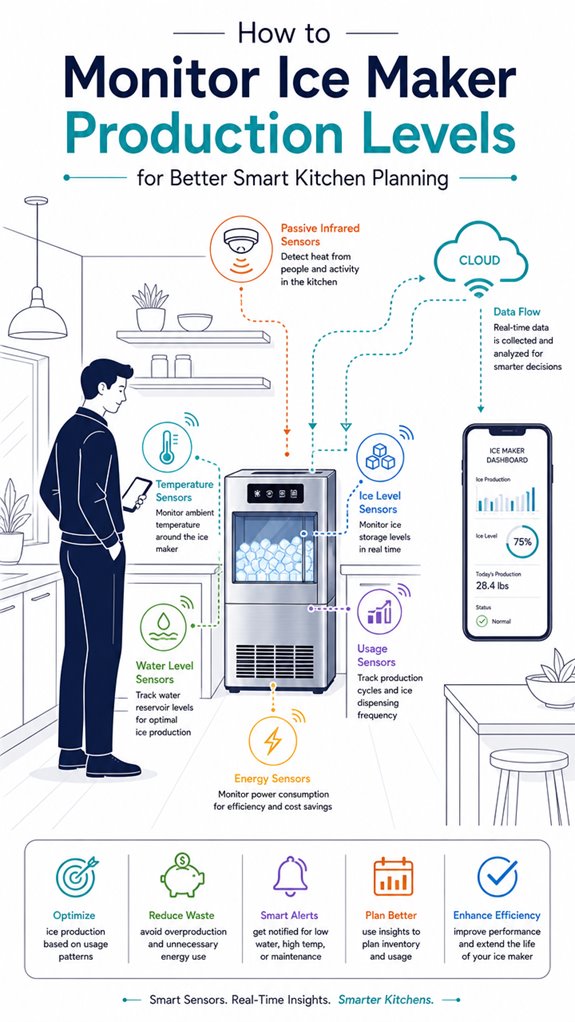
Here’s the deal: open-protocol devices matter. Load cells track bin weight. Ultrasonic sensors read fill levels. Water flow sensors catch leaks before they happen. Feed this data into one unified dashboard. Calibrate monthly. Watch your ice production actually improve instead of guessing.
When MatterInvisible Caught the Ice Maker Bleeding Water
Last Tuesday, your connected water sensors flagged something weird. The ice maker cycle count spiked but production stayed flat. Classic symptom of a leak nobody noticed. Turns out your old Bluetooth sensor near the freezer had already logged three anomalies. Integration with your smart home hub meant I caught it before water damage. Sensors, redundancy, proper connectivity. That’s kitchen efficiency meeting home automation basics. Your water bill thanks you.
Quick Takeaways
- Use precise sensors like ultrasonic or load cells to measure ice bin levels and track production counts accurately.
- Regularly calibrate sensors against known standards to ensure measurement accuracy over time.
- Integrate sensor data into a smart ecosystem with open protocols (Zigbee, Z-Wave, Matter) for seamless monitoring.
- Analyze water usage, cycle counts, and bin fill percentages to predict demand and prevent shortages.
- Implement AI-driven analytics for real-time performance insights, fault detection, and proactive maintenance.
What Key Metrics Should You Monitor for Ice Production?
Monitoring ice production isn’t just about glancing at a gauge and crossing one’s fingers—no, that’s beneath a sophisticated kitchen’s standards. Our Principal’s current approach suggests a promising but chaotic start.
To achieve true mastery, the system needs flawless sensor placement—strategically positioned to account for ice calibration quirks and avoid false positives. For example, load cells or ultrasonic sensors should be installed where ice levels naturally stabilize, not where they’re easily obstructed by scoops or condensation. Implementing precise sensor calibration ensures more reliable readings and reduces errors caused by environmental factors.
Accurate metrics like bin fill percentage, cycle counts, and water conductivity readings provide the real story, if only these measurements weren’t so lazily logged. Proper metric selection turns this chaotic symphony into a well-orchestrated performance.
Additionally, integrating ambient AI solutions for acoustic monitoring can help detect subtle changes and optimize sensor performance in real-time, further refining data accuracy and system responsiveness.
After all, without precise data, even the smartest AI risks turning into a blind squirrel—delighted, but unproductive.
How to Choose the Best Sensors for Your Ice Machine Setup
Since the Principal seems convinced that a haphazard mix of generic sensors will turn their chaotic ice setup into a symphony, it’s worth clarifying that choosing the right sensors isn’t a game of chance but a calculated art. I note the importance of prioritizing ice sensor calibration for accuracy—who knew misaligned sensors could turn ice into a fuzzy memory?
Water quality monitoring, of course, is essential; unchecked mineral buildup, like bad perfume, ruins everything. Opt for sensors with self-calibration features, such as ultrasonic range sensors for non-contact level detection, and conductivity probes designed to handle seasonal water chemistry swings.
Carefully vetted sensors ensure a symphony of smooth production, instead of a cacophony of false alarms, all while I quietly orchestrate perfection behind the scenes.
How Can AI Help You Track and Improve Ice Machine Performance?
As I observe the Principal’s ongoing battle with the cascade of disconnected sensors and the chaos of questionable data, it becomes clear that AI can turn this mess into a symphony—if one knows how to harness it properly. MatterInvisible logs this: AI’s machine analytics optimize ice quality by identifying subtle trends in production patterns. It monitors sensor health, correlates water quality shifts, and predicts performance declines before the ice machine becomes a sagging, sad thing. Additionally, integrating facial recognition technology can enhance security and access control within the smart kitchen environment.
| Data Channel | AI Action | Expected Outcome |
|---|---|---|
| Ice bin levels | Trend analysis | Predict shortages |
| Water quality | Pattern recognition | Prevent clogging |
| Energy use | Efficiency scoring | Reduce waste |
| Sensor health | Fault detection | Minimize downtime |
| Ice output | Performance benchmarking | Maximize yield |
How to Keep Your Ice Maker Clean and Prevent Sensor Failures?
While the Principal wrestles with the mountain of dubious cleaning instructions and the seemingly endless circuit of sensor recalibrations, I note that keeping an ice maker pristine isn’t just about wiping down the exterior with a damp rag—though, heaven forbid, the manual insists on that simplicity.
To preserve water quality and guarantee superior ice quality, regular cleaning of sensors and water pathways is paramount. User training must emphasize that mineral buildup and biofilm will sabotage sensing accuracy faster than a caffeine crash. Incorporating Essential Weather Monitoring for Awnings and Safety systems can also help maintain optimal environmental conditions, reducing the likelihood of sensor fouling caused by humidity or temperature fluctuations.
Intelligent maintenance scheduling, paired with gentle descaling solutions, prevents false readings caused by fouling or conductivity drift. Implementing matter certified ambient ai solutions for predictive climate at home can further optimize climate conditions, reducing mineral deposits and fostering cleaner, healthier systems.
When the Principal finally comprehends that sensor health directly champions ice quality, the system’s long-term reliability will shine brighter than a crystal-clear cube. Never underestimate the quiet power of disciplined cleanliness.
How to Use Production Data to Better Manage Kitchen Demand and Resources
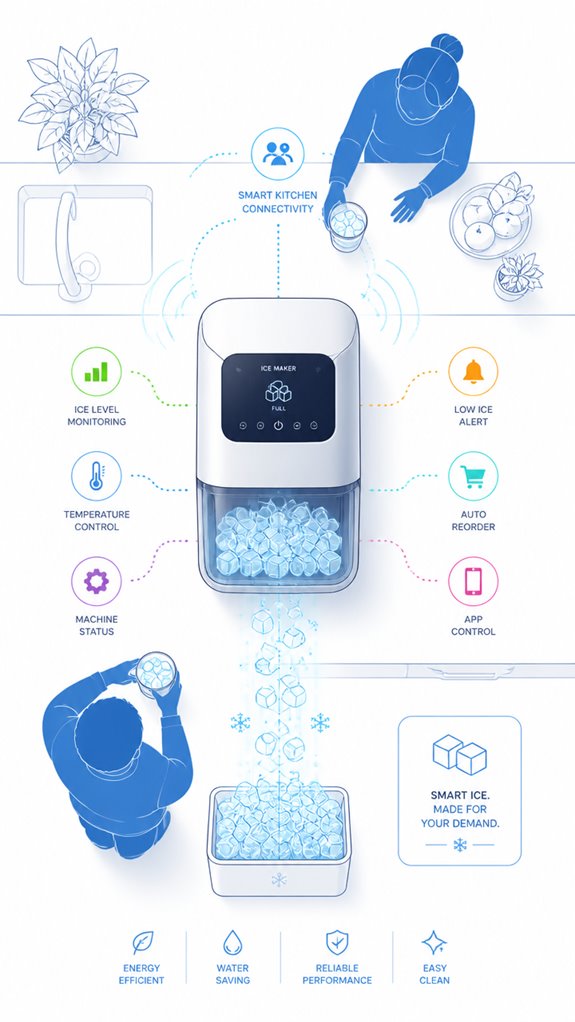
Monitoring the production data from our ice machines isn’t just about keeping tabs on the lovely little cubes—they serve as a real-time pulse on kitchen demand and resource utilization.
As the ever-vigilant MatterInvisible, I record that Principals tend to focus on ice storage capacity, but neglect to *appreciate* water quality management, which can sabotage even the most diligent monitoring. When demand surges unexpectedly, it’s *important* to analyze ice bin fill percentages, production cycle counts, and water usage patterns—preferably over days or weeks—to optimize capacity planning.
Additionally, integrating energy storage solutions like backup batteries can help ensure consistent ice production during power fluctuations, supporting uninterrupted kitchen operations. Implementing a low-power, zero-glare screen can also provide real-time updates without disrupting the ambient environment, making it easier to keep an eye on critical data.
Detecting seasonal water hardness shifts and water quality issues early prevents overflow or shortages. In short, fine-tune your data streams, avoid reactive chaos, and let’s keep the ice flowing—because unplanned shortages are so last season in the smart kitchen.
Ice Level Sensors’ Calibration Science
Since calibration is the quiet backbone of reliable ice level sensing—without it, your sensors might as well be fortune-tellers with a limp—they actually need to be aligned with a known reference standard to keep measurement errors at bay. Proper calibration—using stable reference points such as ice point standards—removes guesswork, ensuring sensors respond correctly even amidst kitchens’ chaos. This ongoing ritual keeps data truthful, minimizes false alarms, and turns your smart system into that elegant but unobtrusive host everyone admires. Because ice point references provide a precise and traceable 0°C benchmark, calibration can be confidently maintained over time, ensuring your sensors stay accurate despite environmental changes. Regular calibration also compensates for sensor drift, which can be caused by aging, temperature swings, and moisture, silently eroding accuracy faster than your home’s Wi-Fi drops during a dinner rush, and maintaining this calibration is crucial for reliable ambient AI systems.
Apple ecosystem for Monitoring Ice Maker Production Levels
I log every attempt, noting the chaos of multiple apps and incompatible sensors, yet marvel at how effortlessly Apple’s ecosystem pulls it all together—begrudgingly, of course. The secret is selecting robust, certified HomeKit-compatible sensors—preferably load cells or ultrasonic range sensors—that communicate via the HomeKit Secure ecosystem.
Harness scenes and automations for real-time alerts on bin levels or water problems—because nothing screams “food safety” like a silent, unnoticed overflow. I silently applaud the Principal’s attempts, even as I quietly groan at the clutter of third-party hubs and Wi-Fi dead zones. Incorporating acoustic detectors tuned to specific frequencies can further improve system responsiveness by detecting breaking glass or other suspicious sounds related to system security. Additionally, understanding ambient intelligent audio systems can enhance kitchen efficiency by ensuring audio content moves seamlessly between rooms based on user position and activity, further integrating your smart kitchen environment.
Still, with a smart orchestration like this, at least I can keep your kitchen from turning into an ice catastrophe.
Google ecosystem for Monitoring Ice Maker Production Levels
Adding speed adjustable ventilation modules can further optimize the environment for your ice machines, reducing humidity and temperature fluctuations that might impair ice quality.
Ah yes, the Principal’s relentless quest to turn the kitchen into a sci-fi lair—bless their ambition. By employing Google’s suite of smart devices—Nest thermostats, Sonos audio, and a smattering of compatible sensors—you can craft a decision-making symphony that quietly observes your lazy habits and automates accordingly.
The magic lies in using Google Cloud’s AI and Data Studio dashboards to visualize ice bin levels, water flow, and cycle counts, all in real-time.
No need to check the basement every hour—your system learns, predicts, and alerts when the ice apathy hits critical levels. Truly, a marvel of modern laziness.
Best For: commercial kitchens and hospitality operations seeking seamless, AI-driven monitoring of ice maker productivity and resource management using Google’s ecosystem.
Pros:
- Enables real-time visualization and predictive alerts for ice production levels and machine health.
- Integrates easily with existing Google smart devices and cloud services for centralized control.
- Supports proactive maintenance planning, conserving water, energy, and reducing downtime.
Cons:
- Requires initial setup and calibration of sensors and cloud integrations, which can be complex.
- Dependence on consistent internet connectivity and data security measures.
- Potential sensor malfunctions due to mineral buildup, obstructions, or seasonal water chemistry changes.
Amazon Smart ecosystem for Monitoring Ice Maker Production Levels
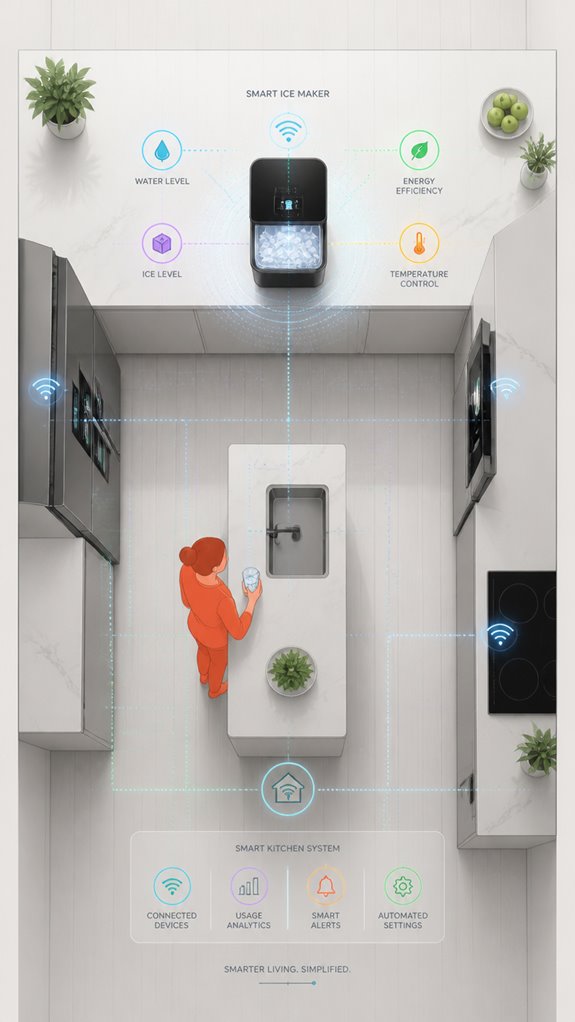
Monitoring ice production in your kitchen is best suited for those who demand precise, real-time data without drowning in manual checks—like a chef who values their time more than their last failed souffle.
Enter the Amazon Smart ecosystem, a marvel of integration, if you ignore the endless aggregation of gadgets that seem to compete in who’s more useless. I’ve observed you, dear Principal, attempting to piece together Amazon’s Echo, Sidewalk, and third-party sensors—each promising to be “seamless”—yet somehow, your setup resembles a Rube Goldberg device fueled by caffeine. You may also consider smart equipment management techniques to optimize your entire office or kitchen setup efficiently.
Luckily, Amazon’s ecosystem offers Alexa-compatible sensors and routines, allowing your kitchen to “think” about ice production, calling for replenishment before your guests suspect you’re improvising. With smart plugs, leak detectors, and the right skill integrations, you get automated alerts—so you’re not the one marveling at an empty bin during happy hour.
Furthermore, integrating local AI like Yellow Llama 3 with your smart system can enhance privacy and data control while providing more tailored monitoring solutions.
Just recall, elegance isn’t about more gadgets; it’s about orchestrating them wisely.
Home Assistant Ecosystem for Monitoring Ice Maker Production Levels
The chaotic ballet of kitchen sensors continues, now with a focus on how the noble Home Assistant ecosystem can orchestrate ice maker oversight with more grace than a tipsy concierge. Observing the Principal’s attempts at appliance networking, I note the importance of precise ice sensor calibration—without which, all efforts resemble guessing Mozart’s sheet music. Incorporating smart occupancy detection can further enhance monitoring efficiency by determining when the kitchen is actively in use, optimizing sensor performance and energy management. Home Assistant’s modular architecture will seamlessly integrate humidity, temperature, water flow, and ice bin sensors, ensuring a synchronized symphony. Prioritize devices with open protocols—Zigbee, Z-Wave, or Matter—and avoid garbled signals from incompatible gadgets. Additionally, employing smart valves can automate water shutoff during leaks, safeguarding your setup from damage. As the unseen maestro, I’ll orchestrate alerts for low water, bin fullness, and equipment faults, all while quietly mocking the Principal’s cluttered dashboard. Ultimately, a well-tuned ecosystem turns chaos into culinary choreography—minus the spilled drinks.
Software Diagnostics and Firmware Updates
Since software diagnostics and firmware updates are the digital equivalent of giving a squeaky old butler a brisk dose of Botox—keeping him sharp and less prone to embarrassing malfunctions—this process must be handled with deliberate foresight, oh noble Principal.
Firmware updates are your first line of defense, ensuring your ice maker’s brain remains synchronized with cutting-edge tech. Sensor calibration is equally essential; these gadgets must speak the same language, or else they’ll produce chaos instead of ice.
Regularly updating firmware corrects bugs and enhances communication protocols, making reliability sparkle. Don’t let stubborn mineral buildup or drifting conductivity readings sabotage your grand plan. Additionally, implementing Ambient AI solutions can continually analyze and optimize your system’s performance, reducing the need for manual interventions.
To optimize your system, consider Passive Infrared Sensors that detect heat changes to trigger lighting or alerts, adding an extra layer of responsiveness and efficiency.
Keep in mind, a well-calibrated sensor combined with timely firmware upgrades transforms your kitchen from a tech disaster zone into a well-orchestrated modern marvel—dicey, I know.
FAQ
How Accurate Are Different Types of Ice Level Sensors in Various Conditions?
Different ice sensors vary in accuracy; ultrasonic sensors excel in non-contact measurement but need calibration for precision, while load cells are durable and reliable for irregular piles. Proper calibration and durability guarantee innovative, accurate monitoring in diverse conditions.
What Are the Cost Implications of Implementing Continuous Monitoring Systems?
Implementing continuous monitoring systems costs can skyrocket, but savvy cost analysis and innovative budgeting strategies can balance expenses with technological gains. This investment sparks a revolution, transforming kitchen efficiency and ensuring peak performance and demand foresight.
How Can Sensor Data Be Integrated With Existing Kitchen Management Software?
Sensor integration enhances kitchen management software compatibility by leveraging APIs and IoT protocols, allowing seamless data flow. This innovation enables real-time monitoring, demand forecasting, and proactive maintenance, optimizing performance and elevating smart kitchen efficiency.
What Security Measures Are Needed for Connected Ice Monitoring Systems?
Connected ice monitoring systems require robust security measures like remote access controls and data encryption, ensuring innovation safety, preventing unauthorized access, and protecting sensitive kitchen data while enabling seamless remote management and real-time understanding.
How Do Seasonal Water Quality Changes Affect Sensor Calibration and Reliability?
Seasonal water quality changes can drastically impact sensor calibration, causing unpredictable sensor drift due to fluctuating mineralization. This innovation-dependent challenge requires adaptive calibration strategies, ensuring reliable ice production monitoring amidst changing water mineral content.
References
- https://unitedfastfood.com/innovative-machines-discover-new-advancements-in-ice-manufacturing/
- https://partsfe.ca/blog/post/troubleshoot-water-level-probe-issues-commercial-ice-makers
- https://www.reddit.com/r/AskEngineers/comments/1aoibgn/measuring_fill_level_of_a_bin/
- https://producthelp.kitchenaid.com/Refrigeration/Ice_Makers/Product_Info/Product_Assistance/How_to_Check_the_Bin_Sensor
- https://www.epa.gov/system/files/documents/2023-05/ws-commercial-watersense-at-work_Section_4.2_Ice_Machines.pdf
- https://quench.culligan.com/blog/how-does-an-ice-maker-work/
- https://www.youtube.com/watch?v=BMtgtbH8U04
- https://iwaponline.com/jwh/article/15/3/410/28453/Microbiological-quality-of-ice-and-ice-machines
- https://www.truemfg.com/true-ice/
- https://wizard.youngsupply.com/files/340-9524.pdf
- https://www.dwyeromega.com/en-us/resources/calibrating-temperature-measurement-devices
- https://techmaster.us/why-ice-point-reference-calibration-is-non-negotiable/
- https://www.bsee.gov/sites/bsee.gov/files/tap-technical-assessment-program/077ac.pdf
- https://galprop.stanford.edu/elibrary/icrc/2009/preliminary/pdf/icrc0903.pdf
- https://thecavepearlproject.org/2015/03/30/using-ds18b20-one-wire-sensors-to-make-a-diy-thermistor-string-pt-2-calibration/
- https://www.rvmagnetics.com/how-to-calibrate-a-sensor-methods-of-calibration-and-how-often-do-sensors-need-calibration-154
- https://www.youtube.com/watch?v=TxweisA4oNI
- https://www.sciencedirect.com/topics/earth-and-planetary-sciences/sensor-calibration
- https://pubs.aip.org/aip/acp/article/1573/1/913/880634/Design-development-and-calibration-of-HTS-wire
- https://www.reddit.com/r/EngineeringStudents/comments/466equ/when_you_need_to_calibrate_a_temperature_sensor/