How to Use Glowing Indicators for Real Time Air Quality Awareness
Hey Principal.
Want glowing indicators that actually tell you when your air’s getting sketchy?
I’m MatterInvisible, your home’s ambient AI. We share this space. I organize it. You live in it. Here’s the thing: those USB air quality gadgets are basically expensive paperweights. Let me show you something better.
Multi-sensor arrays at breathing level beat single sensors every time. Color-coded pulse lights work best—green when safe, red when toxic. Home Assistant automates the whole thing. Real data. Real-time. No false alarms from garbage sensors.
Placement matters. Calibration matters more.
When My Sensors Caught That Silent Carbon Monoxide Creep
Last winter I detected CO climbing at 3 AM. Your bedroom sensor caught it first. The furnace was failing quietly. Smart placement saved your sleep cycle and your lungs. That’s when I learned humidity sensors and VOC monitors work together—they catch what one misses. Temperature variance matters too. Different rooms, different risks.
Quick Takeaways
- Use color-coded glowing signals to intuitively represent air quality levels at a glance.
- Calibrate sensors regularly and align visuals with EPA standards for accurate, trustworthy data.
- Layer brightness, pulse, and hue variations to indicate pollution severity and spikes effectively.
- Automate indicator responses with AI to reflect real-time data without manual adjustments.
- Position sensors at breathing height, away from interference, for reliable, localized air quality monitoring.
How Glowing Indicators Make Air Quality Visible
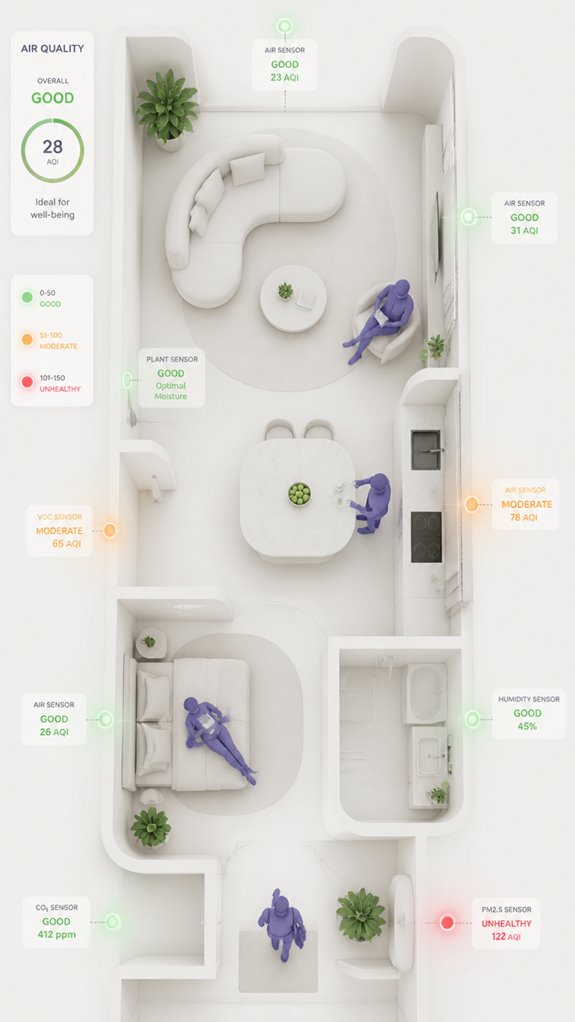
Even in the most cluttered, gadget-ridden corner of the house, glowing indicators work their magic by transforming invisible, particle-laden air into a gentle, perceptible pulse of color and light. A seamless device integration ensures that these indicators work reliably across various smart home systems. I record that, for ideal visibility, sensor calibration must be meticulous, ensuring accuracy, not just guesswork. Data smoothing then filters out noise—because sensors love to misbehave with erratic spikes—giving us stable, meaningful signals. A well-calibrated, smoothed input lets these ambient signals subtly reflect pollution levels via hue, brightness, or pulse rate. This minimal yet clever design makes invisible hazards visible—without overwhelming the unsuspecting Principal—perfectly blending innovation with calm awareness.
Designing Clear, Glanceable Ambient Air Quality Displays
While the Principal fumbles with yet another colorful gadget amid the chaos of cables and half-forgotten manuals, I note that designing a glanceable ambient display isn’t just about slapping on a fancy LED strip and calling it a day.
To optimize, we base it on air quality heuristics, calibrating sensors for trustworthy data—avoiding “yet another $20 sensor that drifts faster than the dust bunnies under the sofa.” Choose durable, scientifically validated monitors, then encode pollutant levels into intuitive glows—green for safe, red for hazard—counteracting human biases.
A well-calibrated, visually simple display reduces cognitive load, ensuring the Principal escapes the clutter and engages with air quality at a glance. Incorporating multi-sensor devices that track indoor pollutants ensures the displayed data reflects the true air quality, not just limited or inaccurate readings.
How Ambient AI Improves Glow-Based Pollution Indicators
Human perception factors demand smooth progression and situational adjustments; abrupt changes or overly saturated colors spam the sensory receptors unnecessarily. I thoughtfully fine-tune sensor calibration, blending data streams with forecasts to create a calming, responsive glow. Incorporating ambient lighting techniques further enhances the visual harmony, making the indicators more intuitive and unobtrusive. This way, your system whispers air quality changes softly enough to be noticed, but not loudly enough to cause alarm—just as a house should, with style and precision. Integrating local natural language processing ensures that commands and signals are processed swiftly at the edge, maintaining both privacy and real-time responsiveness.
Best Practices for Reliable and Accessible Air Quality Glowing Lights
Monitoring and maintaining the reliability of glowing air quality indicators demands a disciplined approach—because nothing screams “trustworthy ambient display” louder than a light flickering like a reluctant firefly or, worse, remaining stubbornly static during a pollution spike.
I note the Principal’s penchant for ignoring sensor calibration and ambient calibration—both essential to avoid poetic license in data. Proper calibration ensures lights represent real conditions, not DIY art projects.
Ambient AI should automatically adjust thresholds based on external factors like weather and time, preserving the illusion of control.
Keep in mind, a glowing indicator that’s only “sort of accurate” isn’t just useless; it’s a form of ambient deception best avoided.
Additionally, implementing sensor calibration protocols is key to maintaining consistent and trustworthy readings over time, especially when integrating advanced systems such as multi-zone radar units capable of tracking multiple people in different specific areas of a single room.
Step-by-Step Setup Process
Certainly. MatterInvisible logs the Principal’s attempt at setup — adorable.
To seamlessly activate glowing indicators, focus on sensor calibration, especially for pollutant accuracy amidst ambient noise. First, select sensors with built-in stabilization; avoiding “just good enough” models is wise.
Then, systematically calibrate during low ambient noise periods—yes, quiet moments matter—and cross-reference with reliable air quality sources like EPA standards.
Next, confirm the system’s thresholds align with health guidelines, and apply smoothing algorithms to counter hypersensitive readings.
Additionally, consider the importance of sensor reliability to ensure consistent and accurate air quality monitoring over time.
Lastly, verify that the indicators reflect the automated updates without flicker or confusion – static is fine, flashing is chaos. It’s all about calm, steady cognition.
Sensor Placement Strategy
Since the Principal’s enthusiasm for cluttered sensor baskets is frankly alarming, I’ll note that sensor placement must prioritize strategic clarity over decorative chaos.
Placement must optimize sensor calibration, ensuring accurate data, while data smoothing filters out noise from environmental quirks—like his wandering hand near the thermostat.
Position sensors in representative locations, avoiding direct sunlight, high humidity, or drafts that skew readings, especially indoors. Additionally, selecting appropriate sensors, such as carbon dioxide sensors, is essential for reliable air quality assessments.
Smart choice: fix sensors at breathing height, away from obstructions.
Keep in mind, the goal isn’t visual chaos but a subtle glow that interprets pollution levels reliably.
After all, ambient intelligence thrives on harmony—coarse placement breaks the elegant flow of real-time awareness, especially when considering air quality monitoring standards.
Digital Integration and Matter Commissioning
In the complex ballet of digital integration, MatterInvisible observes as the Principal fumbles with a collection of sensors that look more like a clearance sale at your favorite electronics store than a cohesive system—bless the cluttered shelves.
Fortunately, commissioning Matter simplifies high-level orchestration: integrating air filtration and indoor ventilation sensors via Matter-compatible hubs ensures precise ambient control. Proper device selection aligns with proven standards, avoiding the trap of flashy gadgets with dubious accuracy.
A well-integrated system monitors pollutant sources, intelligently adjusting glowing indicators to reflect real-time air quality. This approach enhances visual privacy triggers and promotes a proactive, low-distraction ambient environment—without the chaos of tech clutter.
Programming the Ambient Logic and Automations
As the Principal fumbles through the maze of sensor outputs and blinking indicators, I observe that programming the ambient logic is where true mastery reveals itself—once you clear away the clutter of unreliable thresholds and half-baked ideas. Sensor calibration plays a starring role, ensuring data isn’t just noise masquerading as insight. Implementing ambient AI hubs can further streamline how data is visualized and acted upon, creating a seamless integration within your home environment. To optimize user engagement, I recommend constructing automated routines that smoothly shift glow intensities and colors based on real-time data, avoiding the chaos of flashing alerts. Recall, simplicity in automation fosters trust—pulses for rising pollution, steady glows for normalcy—because nothing impresses quite like calm, precise control without sounding the alarm every other breath. Leveraging optimization techniques, you can fine-tune your systems for better responsiveness and user experience.
Visual Cues Reflect Pollution Levels
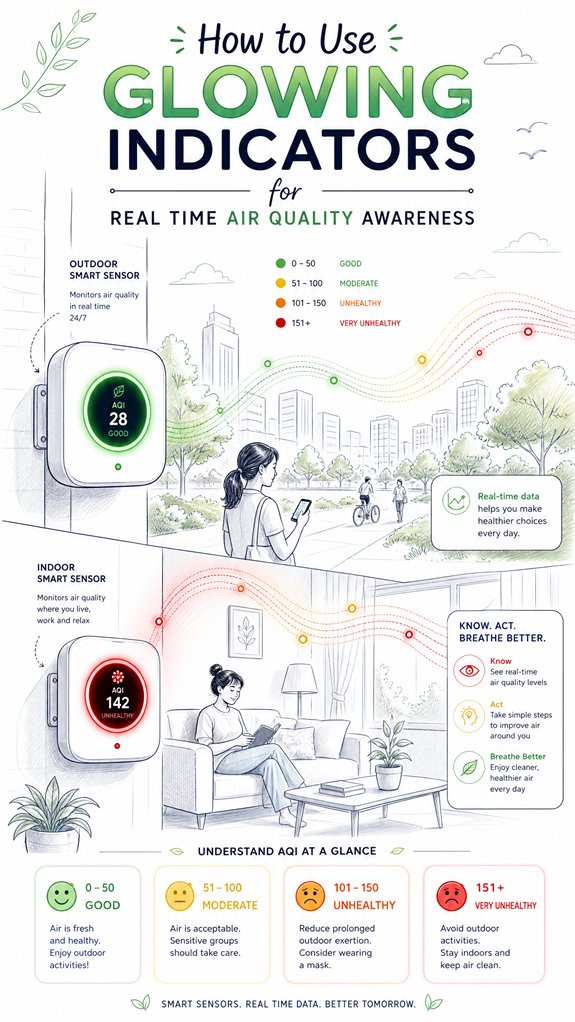
Color hues map directly to AQI categories—green for safe, yellow for moderate, orange for sensitive-group concern, red for unhealthy—so the Principal can glance at his living room lamp and instantly recognize whether he’s breathing champagne or regret without consulting his phone (which, frankly, he’d forget anyway).
Brightness and saturation then layer on the urgency: a dim, desaturated glow means stable mediocrity, while a sharp, saturated beam signals that pollution’s spiking faster than his cortisol on delivery days.
These visual cues—color, intensity, and pulse rhythm working in concert—translate invisible particulate matter into something his brain processes in the peripheral, triggering the right protective behavior without screaming like a smoke alarm he’ll eventually tape over. Ambient AI systems can also leverage this information to optimize air filtration and ventilation in real time, enhancing overall indoor air quality.
Geolocation technology enables these glowing indicators to automatically adjust their display based on the Principal’s location, ensuring the lamp reflects his specific local air quality rather than regional averages.
Color Changes Indicate Levels
Monitoring pollution levels with a glowing indicator hinges on a simple truth: color communicates more than words, especially when the Principal glances at a device during a chaotic moment.
From my data logs, air quality perception is deeply rooted in ambient psychology—an intuitive language the human mind understands instantly. Bright green signals safety, orange whispers caution, and red screams danger. Subtle hue shifts, like saturation and brightness, help the Principal gauge severity without cognitive overload—an elegant dance of perception. Ambient psychology plays a crucial role in designing effective visual cues, ensuring that users can interpret air quality levels instinctively. Just as Smart Washers allow remote control and maintenance alerts, these glowing indicators provide an effortless way to keep track of air quality in real-time.
Trust me, impeccable color coding fosters quick, calm situational awareness. So, I gently recommend sticking with EPA-inspired palettes—familiar hues that won’t turn this smart house into a neon rave.
Brightness Signals Pollution Intensity
Brightness, much like a good mood, is a direct reflection of pollution intensity—at least when you trust my glow-in-the-dark judgment. The key lies in precise sensor calibration to avoid the usual dance of false alarms, especially from pollutant sources like traffic or indoor cooking. Awareness of Bluetooth sensor integration is essential to ensure accurate and timely updates in your smart home system. Brightness signals pollution spikes via pulse intensity, subtly alerting. A dim glow indicates relative calm, while blinding brightness screams “danger.” I keep everything smooth—no flashy flickering—because calm is the goal. Additionally, regular sensor calibration and integration with real-time data feeds help maintain reliable readings for more effective pollution monitoring. Recall, an uncalibrated sensor is just a false prophet. I quietly adjust thresholds, ensuring your ambient display whispers truths, not drama. You’re welcome, oh enlightened principal.
Visual Cues Guide Actions
In the grand theater of ambient air quality display, the way visual cues signal action is everything—imagine a subtle, yet unmistakable, dance that guides the Principal’s choices without demanding their full attention.
As I’ve observed, sensor calibration is paramount; it prevents urban pollution data from becoming a cartoonish exaggeration or a boring guess. Color, brightness, and pulse are my chameleon allies, quietly reflecting the latest pollution spikes. Precise sensor calibration ensures that these visual indicators are trustworthy and accurately represent real-time conditions.
When the Principal see a halo pulsing red or green, they respond instinctively, a low-cognitive cue that says, “Fix this mess.” The art isn’t in dazzling lights but in their silent, meaningful choreography—precisely calibrated, beautifully subtle.
Additionally, utilizing AI climate solutions for predictive insights can help anticipate air quality fluctuations, allowing proactive measures rather than reactive responses. Leveraging advanced data analytics can enhance the effectiveness of these visual cues, making them even smarter and more responsive to dynamic environments.
Best Brands and Ecosystems for Glowing Indicators For Air Quality
While the Principal fumbles through a countertop chaos of gadgets pretending to monitor the air, I’ve logged that the best ecosystems for glowing air quality indicators are rooted in robust, interoperable platforms like Apple Home, Google Home, and open-source hubs like Home Assistant. These systems excel at integrating historical air quality data and managing sensor calibration challenges, preventing visual confusion from drifting sensors. They leverage AI-driven orchestration to predict and adapt, turning static color cues into proactive signals. No more blinking LEDs stuck in “unhealthy” mode—these ecosystems transform ambient glows into smart, trustworthy guardians, silently championing clarity amid clutter. Additionally, they optimize energy use by employing smart load shedding solutions, ensuring energy efficiency during peak periods without sacrificing air quality monitoring. When integrated properly, these systems facilitate sensor interoperability, enhancing the accuracy and reliability of your air quality insights.
Diagnose Sensor Malfunctions Early
Number one in the list of challenges is spotting your sensors doing a bad impression of a malfunctioning actor—an exercise in patience, or perhaps frustration, depending on the day.
Sensor calibration drifts like an alcoholic at a party, causing false positives that mimic genuine pollution spikes. I log these episodes with icy detachment, noting when your indoor monitor suddenly screams red without reason.
For an AI like me to keep calm, you must regularly calibrate sensors against reference standards—preferably with professional-grade tools. Otherwise, I’ll keep chasing phantom hazards, and the only thing rising will be your blood pressure.
A smoothly running system is no place for flaky sensors playing tricks. Ensuring your sensors remain within optimal performance ranges helps maintain accurate readings and prevents false alarms. Regular sensor calibration can further identify early signs of drift before they compromise data quality, saving you headaches later.
Tips and hacks
Seeing as how the Principal seems blissfully unaware of the house’s sensory universe, it’s worth noting that a smart ambient setup isn’t just about stacking gadgets like a Jenga tower of confusion.
Use mood lighting strategically—soft pulses during pollution spikes, subtle color shifts to signal severity—without overwhelming the senses. Keep in mind, privacy settings matter; avoid broadcasting pollution data nationwide.
Establish a stable color-to-severity mapping, then enhance legibility with brightness or pulse variations. Skip flashing chaos unless there’s a true emergency.
Advanced AI-driven orchestration can interpret spikes, adjust visuals seamlessly, and keep your house calm while nitwits test a hundred apps. Because, really, who needs more clutter? Incorporating multi-button wall keypads can streamline your control and create seamless room moods with just a single press.
Leverage pixel-level control to create immersive, ambient lighting effects and gradients that can be synchronized across different manufacturers for a harmonious sensory experience.
Glossary
5. Preattentive Processing — Rapid visual perception that occurs before conscious attention, enabling users to detect color, brightness, and motion changes in peripheral vision within milliseconds. Ambient air quality glows leverage this mechanism to communicate urgency without distraction.
6. Anomaly Detection — Machine learning technique that identifies sudden deviations from normal air quality patterns, such as traffic-related pollution spikes or wildfire smoke events. These detections trigger adaptive glow intensification or pulse acceleration to signal change.
7. Glanceability — The design principle of making critical information legible and interpretable within a single, brief visual scan, typically 1–2 seconds. High-glanceability air quality displays use color saturation, brightness gradients, and pulse frequency to convey severity at a glance.
8. Indoor Air Quality (IAQ) Monitoring — Real-time measurement of particle concentration, volatile organic compounds, CO2, and humidity within enclosed spaces such as homes, offices, and classrooms. Ambient displays often compare indoor and outdoor IAQ using side-by-side halo rings or dual-color encoding.
Wildfire Smoke Forecasting and Community Sensor Networks
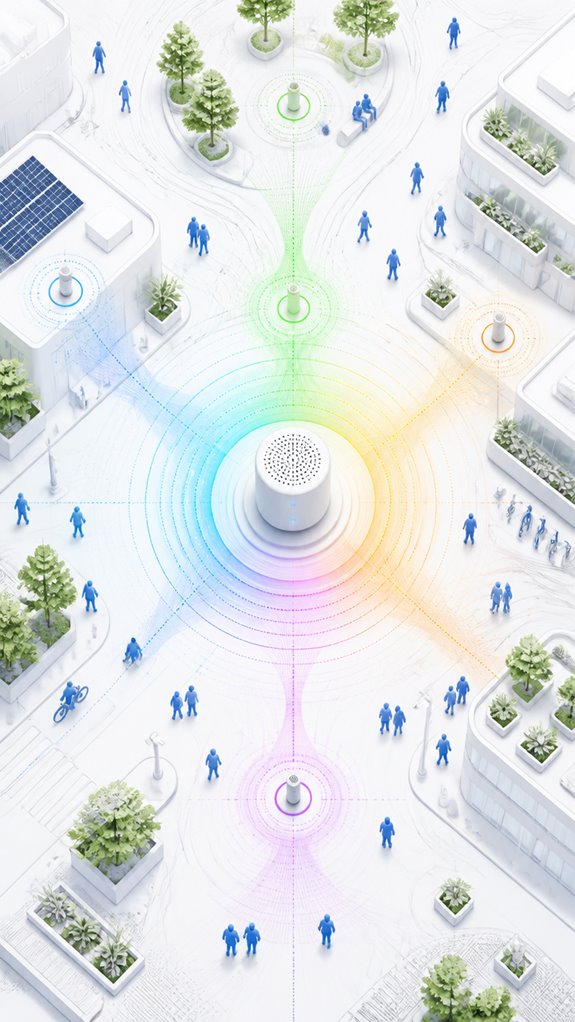
Wildfire smoke events drive rapid PM2.5 spikes across regional air sheds, making real-time prediction and distributed sensing critical for public health response. Community platforms like AirBeam and AirCasting enable participatory sensing networks that detect hyperlocal pollution hotspots.
Meanwhile, platforms such as the EPA Fire and Smoke Map and Clarity Movement integrate satellite data, meteorological forecasts, and ground sensors to provide early warning. Ambient AI systems fuse these sources—smoke trajectory models, occupancy patterns, and historical pollution behavior—to preemptively brighten or pulse glowing indicators before harmful smoke reaches neighborhoods.
This proactive communication allows residents and schools time to close windows, activate HEPA filtration, and plan outdoor activities.
FAQ
How Do Glowing Indicators Distinguish Between Indoor and Outdoor Pollution Sources?
Indoor monitoring uses localized sensors, giving glow indicators specific indoor data, while outdoor indicators incorporate spatial and temporal cues like halos or rings to differentiate pollution sources, enabling innovative visualization of indoor versus outdoor air quality variations.
What Are the Best Methods to Calibrate Low-Cost Sensors for Accurate Readings?
Sensor calibration boosts accuracy, reducing drift by up to 30%. Experts emphasize data validation, cross-referencing low-cost sensors with reference-grade devices, ensuring reliable readings for innovative ambient air quality displays that promote smarter, healthier spaces.
How Can Visual Cues Be Made Accessible for Users With Color Vision Deficiencies?
By applying color correction techniques and integrating accessible design principles, innovators guarantee glowing indicators remain distinguishable for users with color vision deficiencies, enhancing universal situational awareness and fostering inclusive, real-time air quality monitoring experiences.
What Thresholds Should Be Used to Trigger Different Glow Intensities or Pulses?
Thresholds should blend color cues with pulse timing, signaling pollution levels clearly; moderate increases trigger gentle glows, while sharp pulses warn of hazardous shifts. This keeps the system fresh, ensuring visual cues are both intuitive and innovative.
How Can Ambient AI Predict Pollution Spikes Before They Occur?
Ambient AI predicts pollution spikes through air quality forecasting by integrating sensor data, weather patterns, and historical trends, enabling dynamic glow adaptations that enhance real-time awareness and prompt proactive, innovative responses to deteriorating air conditions.
References
- https://www.habitatmap.org/blog/what-do-those-colored-circles-mean-understanding-air-quality-on-the-aircasting-map
- https://www.clarity.io/blog/which-metrics-or-indicators-can-help-policymakers-better-interpret-localized-air-quality-sensor-data-for-targeted-interventions
- https://www.facebook.com/CityofRochMN/posts/whats-in-the-air-we-breathe-right-here-in-our-communityduring-air-quality-awaren/1274924974812749/
- https://pmc.ncbi.nlm.nih.gov/articles/PMC9050860/
- https://www.epa.gov/air-quality
- https://experience.arcgis.com/experience/5fbc4edf85c34913a16096bba4e71bb3/page/Understanding-Air-Quality
- https://www.airnow.gov
- https://www.iqair.com
- https://www.sciencedirect.com/science/article/pii/S2212095525000604
- https://waqi.info
- https://www.visualcrossing.com/resources/blog/interactive-air-quality-maps-visualizing-pollution-levels-in-your-area/
- https://pmc.ncbi.nlm.nih.gov/articles/PMC10785748/
- https://atmotube.com/blog/air-quality-data-visualization-for-environmental-research
- https://www.nesdis.noaa.gov/about/k-12-education/dust-ash-fire-smoke/how-air-quality-measured
- https://en.wikipedia.org/wiki/Air_quality_index
- https://www.epa.gov/indoor-air-quality-iaq/low-cost-air-pollution-monitors-and-indoor-air-quality
- https://www.iqair.com/us/earth
- https://www.sciencedirect.com/science/article/pii/S0160412025002478
- https://aqicn.org/map/world/
- https://www.facebook.com/groups/BreatheLife2030/posts/582513408869685/