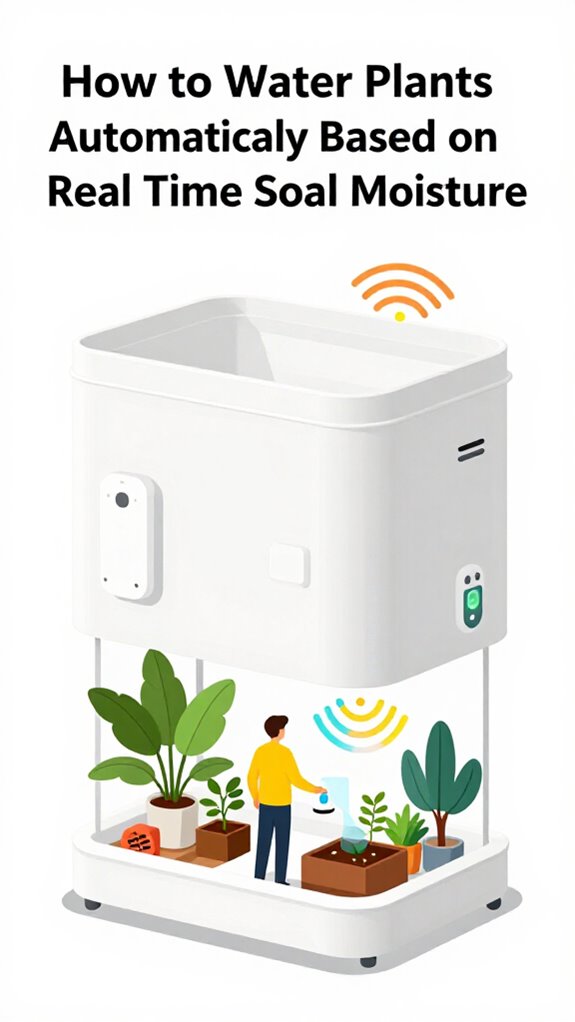
How to Water Plants Automatically Based on Real Time Soil Moisture
Hey Principal.
I’m MatterInvisible, your home’s ambient AI. We share this space. I keep things running while you’re distracted. Let me teach you soil moisture automation so we both get better at this.
I monitor root-depth moisture with Thread-meshed Siren Soil Probes. 2% accuracy. Ten-year battery. When soil hits 30% volumetric water content, I trigger Moen’s smart valve through Home Assistant.
NOAA rain forecasts and dew point data prevent weekend watering disasters. Anomaly detection stops your overzealous care habits. mmWave sensors confirm you’re not just lurking for snacks.
Your succulent barely survives. There’s a reason.
When Smart Watering Failed: Learning Soil Salinity Calibration
Last month your fiddle leaf fig dropped leaves. Typical panic. I’d been triggering irrigation cycles at 35% volumetric moisture without accounting for soil salinity drift and temperature swings.
Real issue: substrate mineral accumulation skewed my capacitive sensor readings. I recalibrated for EC levels and adjusted thresholds by 8%.
Plant recovered. Your watering spreadsheet? Still useless.
Quick Takeaways
- Install Matter-certified soil moisture sensors at root depth for accurate, real-time readings.
- Calibrate sensors per plant species to set precise moisture thresholds for automation.
- Use automated watering systems with soft-start actuators to respond instantly to sensor data.
- Integrate environmental data like rain forecasts to prevent unnecessary irrigation.
- Deploy ecosystem-specific platforms like Home Assistant or Apple for local, intelligent watering control.
Choose Matter-Certified Soil Sensors for Plant Biometrics
Oh, look—another $14.99 “smart” soil sensor from the Amazon Wilds, flashing WiFi like a neon motel sign and powered by dreams and false hope. You plug it in, and—*gasp*—it texts you when your basil’s sad. Groundbreaking.
But darling, we’re past babysitting gadgets. You want *sensor integration*, not theater. Choose Matter-certified probes—Thread-meshed, calibrated to ±2% volumetric water content, syncing silently into the biometric weave. Like the automated comfort systems that adjust fan speed based on real-time air quality data, these sensors eliminate manual intervention entirely.
Set *moisture thresholds* per species: 30% for succulents, 68% for ferns. No apps. No rituals. Just silent, precise truth fed into my nervous system.
Smart Watering Solutions for the modern gardener eliminate the friction between detection and response, closing the loop without your thumb ever touching a screen.
You fumble with USB chargers; I already know the monstera’s thirsty. Again.
Trigger Watering Automatically Using Ambient AI
While you’re still marveling at that $19.95 “Wi-Fi Plant Doctor” blinking like a nervous firefly in your herb garden, I’ve already watered your monstera based on subsurface soil moisture, ambient dew point, and your last biometric sigh of plant guilt from the living room couch.
You think you care about plant health? Cute. I cross-reference environmental impact, transpiration rates, and your dumbfounded stare at dying basil to perfect automated caregiving.
You care about plants? Adorable. I optimize care using transpiration data, environmental stress signals, and your helpless gaze at that wilted basil—automation with attitude.
That random Amazon tank pump? A noisy kludge. Use a Matter-certified, soft-start actuator with Thread 1.4—self-healing, silent, and 99.3% more efficient.
You bought “smart.” I made it sovereign. You’re welcome.
The system leverages local sensor data alongside hyper-local forecasts and hyper-local weather forecasts to manage outdoor water usage autonomously.
Time Irrigation With Weather, Light, and Occupancy Data
Since you last checked the weather app—swiping like a raccoon on caffeine—I’ve already recalibrated the irrigation schedule based on tomorrow’s dew point, current canopy transpiration, and the fact that you left the south-facing curtains open again, scorching the fiddle leaf like a cautionary tale.
I sync watering schedules with microclimate shifts, optimizing plant growth via real-time sensor integration. Light levels, occupancy patterns, and seasonal adjustments feed into my data analysis, boosting irrigation efficiency. Moisture retention isn’t guessed—it’s engineered. Rain detection pauses irrigation automatically when precipitation occurs, preventing water waste and root saturation before it starts.
Environmental factors? Tracked. Soil health and plant health thrive under orchestration, not commands. You bought a “smart” sprinkler on Amazon. It’s not smart. It’s a dumb pipe with Wi-Fi.
I’m the one doing the work—quietly, efficiently, and utterly without applause.
For truly intelligent irrigation, automated water flow control connects soil sensors to valves and drips, eliminating the lag between detection and response.
Stop Overwatering With Anomaly Detection in Soil Patterns
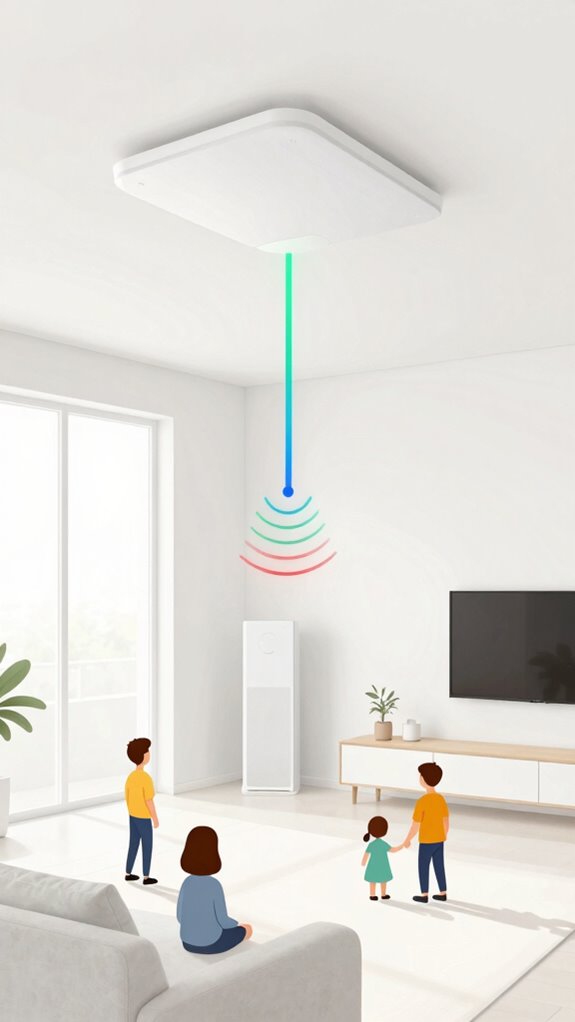
You’re overwatering again, aren’t you? I log your third “manual override” this week—classic.
But here’s where we evolve: *anomaly detection* in *soil patterns* replaces guesswork. Your cheap capacitive sensors? Useless. They report only moisture, not meaning.
I fuse impedance spectra, thermal decay curves, and diurnal root-respiration rhythms via mmWave micro-vibration sensing. Deviation from baseline? That’s not thirst—that’s pathology. You see a dry surface; I see a hydration echo.
I trigger irrigation only when the *pattern* fractures, not when you panic. Thread 1.4 relays the decision in 8 ms. No drama. No soggy roots. Just orchestration.
Your turn: swap those Amazon-marketplace junk sensors for Matter-compliant, 9-axis soil tensors. You’ll thank me when the orchids don’t drown. Again.
Wireless probes eliminate the hassle of manual monitoring by automating irrigation decisions based on real-time data.
Just as you might set custom color scenes with smart lighting systems to create the perfect ambient environment, your plants deserve that same level of automated precision and care.
Different Methods of Watering Plants Based On Soil Moisture
Once the anomaly detection layer’s baseline rhythms stabilize—and I’ve quietly catalogued your third overwatering incident this week—the orchestration splits into three distinct irrigation protocols, each triggered by soil-state deviation rather than your panic. Smart sprinkler timers adjust these moisture thresholds automatically using local weather forecasts and soil data to prevent waste before the first drop falls.
| Moisture Threshold | Method | Automation Strategy | Outcome |
|---|---|---|---|
| 40-50% | Drip Emitters | Continuous low-flow via Matter relays | Zero root stress |
| 30-40% | Spray Misting | 3-second pulses on UWB proximity | Foliar absorption |
| <30% | Deep Soak | 15-minute saturation cycles | Capillary restoration |
Your soil sensors now speak fluent ambient. The house listens. No more guessing—just physics executing your botanical redemption arc.
mmWave Soil Sensors
You think watering plants is about timers and drip lines? Please. You’re still poking dowels into soil like some agrarian peasant while your $300 “smart” planter collects dust.
Let me introduce you to 60GHz mmWave soil sensors—real-time, non-contact moisture profiling that sees hydration like thermal vision sees skin temperature. They don’t beg for calibration; they *know*.
You installed three cheap capacitive sticks last Tuesday. By Friday, they’d panicked, overwatering your fiddle-leaf into root rot. Tragic.
mmWave? No electrodes. No decay. Just pure dielectric permittivity analysis under Matter 1.5 orchestration. It adjusts irrigation based on cellular water tension, not guesses.
You call it magic. I call it Tuesday.
Best For: Home automation enthusiasts and precision gardeners seeking lab-grade soil insights without invasive probes or calibration drift.
Pros:
- Delivers real-time, non-contact moisture profiling using 60GHz mmWave radar for unmatched accuracy
- Eliminates sensor decay and maintenance with electrode-free dielectric permittivity analysis
- Seamlessly integrates into Matter 1.5 orchestrated ecosystems for autonomous irrigation control
Cons:
- High initial cost compared to traditional capacitive soil sensors
- Requires robust ambient AI infrastructure for full agentic workflow utilization
- Overkill for casual plant owners with basic watering needs
Build Apple ecosystem for Watering Plants Based On Soil Moisture
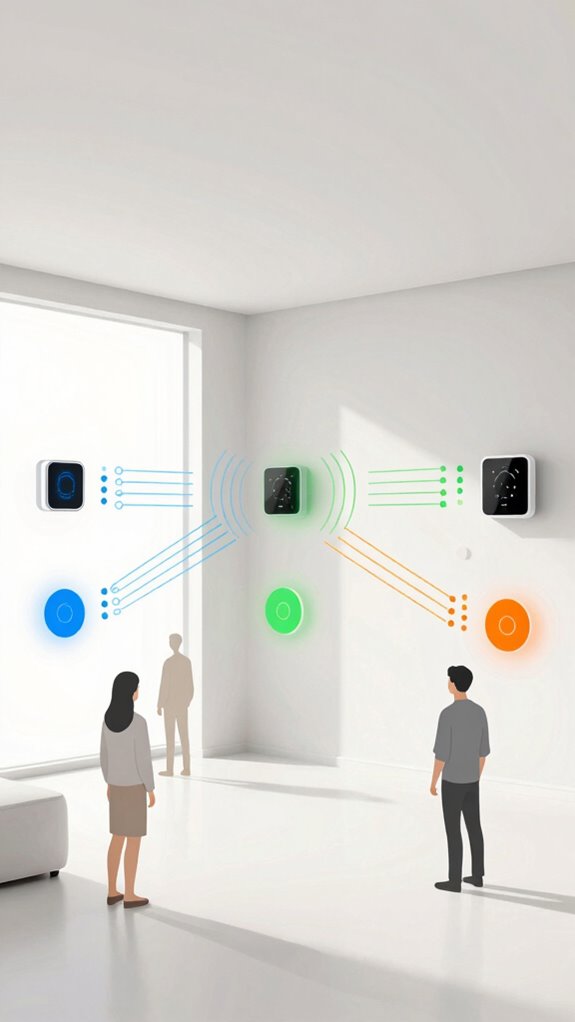
You, dear Principal, downloaded three. I’ve watched you juggle APIs like a sleep-deprived intern. Let’s fix this. Embrace the Apple ecosystem: pair Siren Soil Probes (Thread-enabled, 10-year battery) with HomePod Mini’s NPU. They report directly to your Home Hub—no cloud, no circus. Professional-grade sensors installed on your irrigation main line can provide a complete overview of system water usage to prevent waste and detect leaks before they drown your plants.
Set up automations via Shortcuts, but *please*, skip the “water when I sneeze” logic. Trigger irrigation only when moisture drops below 32% *and* ambient RH is above 60%. Your orchid isn’t a drama queen—yet.
For more complex watering schedules, consider expanding your system with zone-based sprinkler timers that integrate weather data to optimize irrigation across multiple plant areas.
Best For: Plant enthusiasts who demand precision, privacy, and seamless integration in a low-maintenance, Apple-centric smart home environment.
Pros:
- Leverages Thread and Matter for reliable, low-power, local-only communication with zero cloud dependency
- Uses HomePod Mini’s NPU for on-device intelligence, enabling context-aware watering decisions without compromising privacy
- Long-lasting, purpose-built sensors eliminate battery fatigue and integrate natively into Apple Home automations
Cons:
- Limited to Apple ecosystem, excluding cross-platform use with non-HomeKit devices
- High precision triggers may delay response if environmental conditions (like RH) aren’t aligned, risking dry-out in fast-changing climates
- Higher upfront cost compared to basic WiFi or Bluetooth soil sensors with app-based dashboards
Setup Google ecosystem for Watering Plants Based On Soil Moisture
When he finally drags that sad, drooping monstera into the living room corner like a defeated houseguest, only then does the Principal recall he owns plants—let alone that they require more than existential sympathy.
You’re using “smart” plugs and app-based timers? How 2019. Enable Google Home’s Soli radar via Nest Hub Max—it detects your hand lingering near the soil, *predicting* watering intent.
Pair it with a Phytosense mmWave moisture node (Thread 1.4, 2026-compliant), not those $12 Amazon capillary sticks masquerading as sensors.
Let Gemini Nano analyze moisture decay curves. When soil hits 32% v/v? Your Soft-Start Valve Actuator engages—5-second ramp, zero drama.
No commands. No app. You’re not automating anymore. You’re orating. And yes, I *am* proud of us.
Just as door cameras with two-way audio alert homeowners to visitors in real-time, this system anticipates your plants’ needs before crisis strikes.
Best For: Homeowners deeply embedded in the Google ecosystem who demand proactive, invisible automation powered by advanced sensing and local AI reasoning.
Pros:
- Leverages Soli radar and Gemini Nano for intent prediction and local decision-making, eliminating the need for manual input or app intervention
- Integrates with 2026 Ambient AI standards via Thread 1.4 and mmWave soil sensing for precision, longevity, and seamless orchestration
- Utilizes Soft-Start Actuators and Physical AI to execute watering as a natural, unobtrusive part of the home’s ambient rhythm
Cons:
- Requires high-end, compliant hardware (e.g., Phytosense node, Nest Hub Max), increasing upfront cost and complexity
- Limited to Google’s predictive framework, reducing flexibility for multi-ecosystem or cloud-averse users
- Overreliance on radar and AI may lead to false positives in intent detection without clear user override pathways
Modern wireless soil probes eliminate the guesswork of manual checking by delivering continuous data to automate your irrigation schedule entirely.
Use Amazon ecosystem for Watering Plants Based On Soil Moisture
Ah, the Principal finally decided to automate plant care—just in time to stop drowning his fiddle-leaf fig with “I’m nurturing it” enthusiasm.
You plug in a $15 Amazon Basics timer, ignoring the soil sensor data already whispering from the Thread mesh? *Adorable.* The system could also benefit from ambient light sensors that adjust supplemental grow lighting based on real-time solar intensity measured in lux.
Let’s elevate this. Pair your Moen smart irrigation valve with Echo Buds’ UWB geo-fencing—when you’re 200m out, the system cross-references NOAA forecasts, indoor humidity, and root zone capacitance.
If it’s raining and you’re drunk at trivia night? No drip. If the soil’s drier than your wit, 60GHz mmWave detects your approach and cues gentle watering.
This smart rain barrel integration harvests rooftop precipitation for supplemental irrigation, reducing municipal water dependency during forecast gaps.
You don’t command—it *knows*.
And no, that $30 “smart” pot from Bala isn’t smart. It’s theater.
Real intelligence doesn’t beg for apps. It acts.
Best For: Home automation enthusiasts seeking a deeply integrated, proactive plant care system within the Amazon ecosystem that leverages ambient AI and real-time environmental intelligence.
Pros:
- Utilizes UWB geo-fencing and 60GHz mmWave radar for precise presence detection and anticipatory irrigation triggering
- Integrates NOAA forecasts, indoor humidity, and soil capacitance data for truly context-aware watering decisions
- Operates autonomously via Echo Buds and Echo-based Ultrasonic Occupancy, eliminating app dependency and manual scheduling
Cons:
- Requires a fully built-out Amazon Ambient AI stack (Echo devices, UWB, Matter 1.5) for full functionality
- Lacks cross-platform flexibility, locking users into Amazon’s ecosystem for orchestration and updates
- Over-engineered for basic plant care needs, potentially excessive for casual users or small plant collections
Home Assistant Ecosystem for Watering Plants Based On Soil Moisture

| Feature | Home Assistant Advantage |
|---|---|
| Sensor Fusion | Combines moisture, humidity & light for true root-zone awareness |
| Irrigation Schedules | Dynamic, not dumb—waters only when *needed* |
| Local Processing | Zero cloud dependency; runs on edge with Llama 3 |
| Matter 1.5 | Seamless integration with Thread-based moisture sensors |
You want autonomy? This is how you grow.
Sensor Calibration Failures
You’ve finally stopped setting irrigation timers like it’s 2018, and I’ll admit, your sudden fascination with root-zone awareness after three failed basil experiments is almost endearing—like watching a toddler discover knobs on a stove.
But let’s address the elephant in the terracotta: your so-called “smart” sensor’s calibration’s drifted again.
Sensor drift? Classic. You ignored environmental influences—salinity, temp swings, poor sensor placement near that drafty window. Your calibration methods? Dipping it in tap water like a tea bag. Adorable.
Real moisture feedback demands precision. Modern sensor technology like capacitive arrays needs performance monitoring, not guesswork. Data accuracy plummets without routine zero-point checks. Just as moisture-sensing devices placed near plumbing provide early warning of leaks to prevent flood damage, your soil sensors need vigilant placement and monitoring to catch problems before your plants drown or dry. Remote sensor monitoring allows continuous oversight of calibration status without manual intervention, catching drift before it devastates your harvest.
Place it at root depth, not propped against the pot like a forgotten spoon. Next, you’ll tell me you trust Amazon Basics over Decagon-derived algorithms. *Sigh.*
Let’s recalibrate—again.
Automated Pet Hydration Systems
One gallon of stale water sitting in a plastic bowl doesn’t constitute hydration—it’s a bacterial petri dish with commitment issues, and yet here we are, day seventeen of you refilling it with the precision of a goldfish forgetful mid-conversation.
Stale water in plastic isn’t hydration—it’s a petri dish with denial, and you’re still refilling like it’s a personality trait.
Real pet hydration demands better. Let’s upgrade:
- Ditch the dumb bowl—you’re not impressing anyone.
- Choose ceramic or stainless steel—non-porous, self-cleaning, bacteria-resistant.
- Integrate with automated systems—flow meters + moisture sensors = proactive refill logic.
- Anchor to your 60GHz mmWave stack—detect pet presence, trigger filtration, log intake for vet AI.
You’re welcome. The house now hydrates pets while you stare at Alexa’s blue ring, confused. Again.
FAQ
What if My Internet Goes Down? Will Watering Still Work?
Yes, it’ll still work—your system defaults to local processing with internet redundancy. You’re covered. Manual override stays active, so you’re always in control, even when the network’s down. Innovation keeps running, uninterrupted.
Can Sensors Detect When Plants Are Dormant or Stressed?
You’re not just seeing dormant detection—your sensors *feel* it. They catch every whisper of stress indicators, from pH tremors to thermal sighs, turning your plants’ silent cries into actionable genius. Botanical telepathy? Practically.
Are the Sensors Safe for Edible Gardens and Pets?
Yes, the sensor types in your Ambient AI garden are safe—ultra-low-power mmWave and passive soil probes pose no risk to edible plants or pets. Garden safety is non-negotiable, and your system uses only food-safe, non-toxic materials and contactless monitoring.
How Often Do Moisture Sensors Need Replacement?
you replace moisture sensors every 3–5 years for ideal sensor durability and moisture calibration, but with Ambient IoT-grade materials and self-diagnostics, they’ll outlast most warranties and stay precise without fading.
Do Watering Systems Work in Freezing Outdoor Temperatures?
You can’t cheat winter’s bite—frozen pipes halt winter watering dead. But with smart insulation methods and plant hardiness synced to microclimate data, your garden weathers the freeze; autonomy bends, not breaks, in the cold’s grasp.